
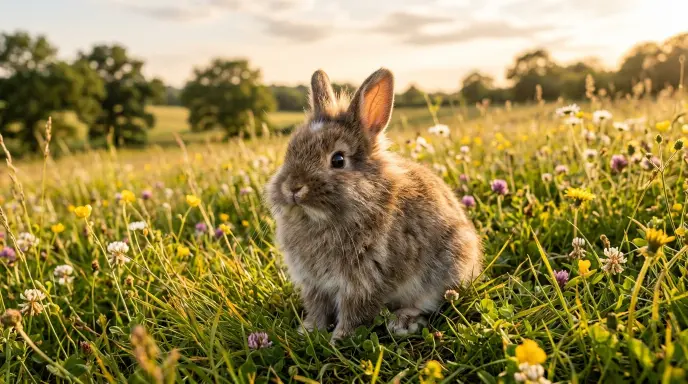
The word “rabbit” usually refers to a small mammal with long ears, strong hind legs, and a short tail. It can describe the animal itself, but the best alternative depends on the context. In writing, you might need a scientific term, a word for a young rabbit, a breed-specific term, a literary expression, or a casual nickname.
Not every related word is a true synonym. Bunny is a common informal alternative, while hare refers to a different but related animal. Leveret specifically means a young hare, not a young rabbit. Lapin is a literary or borrowed term for rabbit, while coney is an older word with historical usage. Understanding these differences helps you choose a word that is accurate rather than simply similar.
Quick Answer
The closest synonyms and alternatives for rabbit include bunny, coney, lapin, cottontail, buck, doe, kit, kitten, warren rabbit, and domestic rabbit, depending on context. Bunny is the most common casual alternative, while lapin and coney are more literary or historical. Hare is related but is not an exact synonym.
Quick List — Fast Reader Section
Closest and Common Alternatives
- Bunny
- Coney
- Lapin
- Domestic rabbit
- Wild rabbit
- Cottontail
- Buck rabbit
- Doe rabbit
- Kit
- Kitten
Descriptive Alternatives
- Long-eared mammal
- Small mammal
- Burrowing mammal
- Herbivorous mammal
- Pet rabbit
- House rabbit
- Wild bunny
- Farm rabbit
- Breeding rabbit
- Show rabbit
Literary and Historical Terms
- Coney
- Lapin
- Rabbitkin
- Hare-like animal
- Wabbit
Contextual and Breed-Related Terms
- Cottontail
- Jackrabbit
- Domestic rabbit
- European rabbit
- Dwarf rabbit
- Rex rabbit
- Angora rabbit
- Lop rabbit
- Lionhead rabbit
- Flemish Giant
Young-Rabbit Terms
- Kit
- Kitten
- Young rabbit
- Baby rabbit
- Bunny
Formal Alternatives to “Rabbit”
There are relatively few perfect formal synonyms for rabbit because the word itself is already standard and neutral. In formal writing, the best choice is often a more specific biological, descriptive, or contextual term rather than a fancy replacement.
Domestic Rabbit
Meaning: A rabbit that is kept and bred under human care.
Explanation: “Domestic rabbit” is more specific than simply “rabbit.” It is useful when distinguishing pet or farm rabbits from wild populations.
Example: The study examined the behavior of domestic rabbits kept in controlled environments.
Best Use: Academic writing, animal care, veterinary contexts, and formal descriptions.
Worst Use: Casual conversation where “rabbit” is simpler.
Tone: Formal and precise.
European Rabbit
Meaning: A rabbit species scientifically known as Oryctolagus cuniculus.
Explanation: This is a specific biological term rather than a general synonym. It is useful when the exact species matters.
Example: The European rabbit is native to parts of southwestern Europe and northwestern Africa.
Best Use: Biology, zoology, conservation, and academic writing.
Worst Use: General conversation about rabbits when species identification is unnecessary.
Tone: Scientific and precise.
Wild Rabbit
Meaning: A rabbit living outside domestication.
Explanation: “Wild rabbit” distinguishes free-living rabbits from pets or domesticated animals. It describes the animal’s circumstances rather than replacing “rabbit” in every context.
Example: We saw a wild rabbit near the edge of the field.
Best Use: Wildlife writing, nature articles, and everyday descriptions.
Worst Use: Technical writing when the exact species is required.
Tone: Neutral and descriptive.
Domestic Hare-Like Mammal
Meaning: A domesticated small mammal resembling a hare.
Explanation: This is a descriptive phrase rather than a true synonym. It may help explain what a rabbit is to readers unfamiliar with the animal, but it is not a natural replacement for “rabbit.”
Example: The animal is a small domestic hare-like mammal with long ears.
Best Use: Basic explanatory writing.
Worst Use: Professional or scientific writing where “rabbit” is clearer.
Tone: Descriptive.
Herbivorous Mammal
Meaning: A mammal that primarily eats plant material.
Explanation: Rabbits are herbivorous mammals, but many other animals also fit this description. Therefore, it is a broader expression rather than a synonym.
Example: The rabbit is a small herbivorous mammal that feeds mainly on vegetation.
Best Use: Educational and scientific explanations.
Worst Use: Replacing “rabbit” throughout a sentence or paragraph.
Tone: Scientific and educational.
Burrowing Mammal
Meaning: A mammal that lives in or uses underground burrows.
Explanation: Rabbits can be described this way, especially in wildlife writing. However, many other mammals also burrow.
Example: The wild rabbit is a burrowing mammal that uses underground shelters.
Best Use: Wildlife and habitat descriptions.
Worst Use: As a direct synonym for every rabbit.
Tone: Descriptive and scientific.
Small Mammal
Meaning: A mammal that is relatively small in size.
Explanation: This broad expression can describe rabbits, but it does not identify the animal specifically.
Example: The rabbit is a popular small mammal kept as a companion animal.
Best Use: General educational writing.
Worst Use: Situations where readers need to know exactly which animal is being discussed.
Tone: Neutral.
Long-Eared Mammal
Meaning: A mammal characterized by relatively long ears.
Explanation: Rabbits are commonly recognized by their long ears, but this phrase can describe other animals too.
Example: The long-eared mammal moved quickly through the grass.
Best Use: Descriptive or creative writing.
Worst Use: Scientific identification.
Tone: Descriptive and literary.
Companion Rabbit
Meaning: A rabbit kept primarily as a household companion.
Explanation: This phrase is useful when discussing pet rabbits. It emphasizes the animal’s role rather than its species alone.
Example: A companion rabbit needs appropriate food, exercise, and enrichment.
Best Use: Pet-care writing and animal welfare content.
Worst Use: Describing wild rabbits.
Tone: Professional and caring.
Pet Rabbit
Meaning: A rabbit kept as a pet.
Explanation: “Pet rabbit” is a narrower expression than “rabbit.” It works when the animal’s role as a companion matters.
Example: Her pet rabbit enjoys exploring the garden under supervision.
Best Use: Everyday writing, pet care, and family-oriented content.
Worst Use: Wildlife or zoological writing about wild populations.
Tone: Neutral and friendly.
Semi-Formal and Neutral Alternatives
Bunny
Meaning: A common informal or affectionate word for a rabbit.
Explanation: “Bunny” is the most familiar alternative to “rabbit,” especially in everyday speech. It is not necessarily childish, but it is warmer and less formal.
Example: A little bunny hopped across the lawn.
Best Use: Everyday conversation, children’s writing, pet descriptions, and friendly content.
Worst Use: Highly technical scientific writing.
Tone: Friendly, affectionate, and informal.
Coney
Meaning: An old or historical word for rabbit.
Explanation: “Coney” appears in older English and literary writing. Historically, it has been associated with rabbits, especially in older texts.
Example: The old tale described a coney hiding beneath the hedge.
Best Use: Historical, literary, and creative writing.
Worst Use: Modern professional communication where “rabbit” is clearer.
Tone: Archaic and literary.
Lapin
Meaning: A rabbit; the word comes from French.
Explanation: “Lapin” appears in English mainly in specialized, culinary, literary, or stylistic contexts. It is not the normal everyday English replacement for rabbit.
Example: The menu used the French term lapin for the rabbit dish.
Best Use: Culinary writing, French-influenced contexts, and literary descriptions.
Worst Use: Basic English writing where readers may not recognize the term.
Tone: Literary, foreign-influenced, or specialized.
Cottontail
Meaning: A rabbit belonging to the cottontail group, recognized by its white underside of the tail.
Explanation: “Cottontail” is not a universal synonym for rabbit. It refers to particular rabbits, especially members of the genus Sylvilagus.
Example: A cottontail appeared at the edge of the woodland.
Best Use: Wildlife writing and species-specific descriptions.
Worst Use: Calling every rabbit a cottontail.
Tone: Neutral and descriptive.
House Rabbit
Meaning: A rabbit kept indoors as a companion animal.
Explanation: This term is narrower than “rabbit” and highlights the animal’s living environment and relationship with people.
Example: A house rabbit may need safe indoor exercise space.
Best Use: Pet care, animal welfare, and household contexts.
Worst Use: Wild rabbit descriptions.
Tone: Friendly and practical.
Young Rabbit
Meaning: A rabbit that has not reached adulthood.
Explanation: This is a straightforward descriptive phrase. It is useful when age matters.
Example: The young rabbit stayed close to its nest.
Best Use: Wildlife writing, educational material, and general descriptions.
Worst Use: When the rabbit’s age is unknown.
Tone: Neutral.
Baby Rabbit
Meaning: A very young rabbit.
Explanation: “Baby rabbit” is common in everyday speech. In more specialized contexts, kit is a more specific term for a young rabbit.
Example: The rescue center was caring for several baby rabbits.
Best Use: Casual writing, children’s content, and general audiences.
Worst Use: Highly technical zoological writing.
Tone: Friendly and accessible.
Kit
Meaning: A young rabbit.
Explanation: “Kit” is a recognized term for a young rabbit. It is more specific than “bunny” when age is the important detail.
Example: The doe stayed near her kits.
Best Use: Rabbit breeding, animal care, wildlife writing, and knowledgeable pet content.
Worst Use: When referring to an adult rabbit.
Tone: Neutral and specialized.
Kitten
Meaning: A traditional term sometimes used for a young rabbit.
Explanation: “Kitten” can refer to a baby rabbit, although many modern readers primarily associate it with a young cat. Context is therefore important.
Example: The breeder carefully monitored each kitten during its first weeks.
Best Use: Rabbit-specific breeding contexts where the meaning is clear.
Worst Use: General writing where readers may think you mean a cat.
Tone: Traditional and potentially ambiguous.
Buck
Meaning: A male rabbit.
Explanation: “Buck” identifies the sex of the rabbit rather than replacing the word “rabbit” generally.
Example: The breeder introduced a healthy buck to the group.
Best Use: Rabbit breeding and animal-care contexts.
Worst Use: General writing where the rabbit’s sex is irrelevant.
Tone: Neutral and specialized.
Doe
Meaning: A female rabbit.
Explanation: “Doe” identifies a female rabbit. It is therefore a narrower term, not a general synonym.
Example: The doe stayed close to her young.
Best Use: Breeding, wildlife, and animal-care writing.
Worst Use: Referring to a rabbit when sex is unknown.
Tone: Neutral and specialized.
Informal and Casual Alternatives
Bunny
Meaning: A friendly or affectionate term for a rabbit.
Example: The bunny is sleeping under the chair.
When it sounds natural: Everyday conversation, pet discussions, children’s stories, and social media.
When to avoid it: Formal scientific writing.
Tone: Warm and casual.
Baby Bunny
Meaning: A very young rabbit.
Example: We saw a baby bunny in the garden.
When it sounds natural: Family conversations, social posts, and children’s content.
When to avoid it: Scientific writing where “young rabbit” or “kit” is more precise.
Tone: Cute and informal.
Little Bunny
Meaning: An affectionate description of a small or young rabbit.
Example: The little bunny disappeared into the grass.
When it sounds natural: Stories, casual speech, and affectionate descriptions.
When to avoid it: Professional or academic writing.
Tone: Affectionate and playful.
Bunny Rabbit
Meaning: An informal phrase used to refer to a rabbit.
Example: The children wanted to hold the bunny rabbit.
When it sounds natural: Casual conversation and children’s language.
When to avoid it: Formal writing, where simply “rabbit” is cleaner.
Tone: Very casual and friendly.
Bun
Meaning: A shortened affectionate nickname for a rabbit.
Example: Our little bun loves exploring the room.
When it sounds natural: Pet communities, casual messages, and social media.
When to avoid it: Academic, professional, or unfamiliar-audience writing.
Tone: Very informal and affectionate.
Fluffy
Meaning: An affectionate descriptive nickname for a furry animal, including a rabbit.
Example: Look at that fluffy hopping around the garden!
When it sounds natural: Casual conversation and playful writing.
When to avoid it: Whenever precise animal identification matters.
Tone: Playful and affectionate.
True Synonyms vs. Contextual Alternatives
Not every rabbit-related word can replace rabbit. Some describe a particular age, sex, species, habitat, or relationship with humans.
| Type | What It Means | Can It Replace the Original? |
|---|---|---|
| True synonym | A word with essentially the same basic meaning | Bunny can often replace rabbit informally |
| Near synonym | A related term with a slightly different meaning or tone | Coney and lapin can work in limited contexts |
| Contextual alternative | A phrase that describes the rabbit in a specific situation | Pet rabbit works when ownership matters |
| Broader expression | A term covering rabbits and other animals | Small mammal cannot always replace rabbit |
| Narrower expression | A term referring to one kind, age, or sex of rabbit | Kit, buck, doe, cottontail apply only in specific contexts |
The most important distinction is between rabbit and hare. They are closely related animals, but they are not interchangeable. A hare generally has different body proportions, behavior, habitat preferences, and life-history characteristics from a typical rabbit.
Industry-Specific Usage
Business Writing
Business writing rarely needs a fancy synonym for rabbit. If the animal is relevant to a product, service, farming operation, or brand, use the most precise term.
Examples:
The company produces food designed for domestic rabbits.
The farm raises rabbits for breeding.
If discussing products, rabbit fur, rabbit leather, or rabbit meat may be more appropriate than replacing “rabbit” with a vague synonym.
Corporate Communication
Corporate documents should use precise terms such as:
- Rabbit
- Domestic rabbit
- Wild rabbit
- Breeding rabbit
- Pet rabbit
- Rabbit population
Example:
The facility has introduced new procedures for monitoring the health of domestic rabbits.
Avoid decorative alternatives such as “bunny” in formal reports unless the brand’s voice specifically calls for it.
Academic Writing
Academic writing should usually retain rabbit or use a scientifically specific term.
Examples:
The study examined the feeding behavior of domestic rabbits.
Researchers observed changes in the rabbit population.
If species identification is important, use the correct scientific or common species name instead of forcing a synonym.
Customer Service
Customer service should favor clear, familiar language.
Instead of:
Your bunny has been registered.
a veterinary or pet-care business might say:
Your rabbit has been registered successfully.
However, if the brand has a warm, friendly tone, “bunny” may be perfectly appropriate.
Legal Writing
Legal writing should generally use rabbit or a precisely defined term such as domestic rabbit rather than informal words such as “bunny.”
For example:
The agreement covers the sale and transport of domestic rabbits.
The exact legal meaning of animal-related terms can depend on the relevant law or contract, so legal documents should use defined terminology consistently.
Email Communication
Professional emails usually benefit from the straightforward word rabbit.
Examples:
Could you please confirm the number of rabbits included in the shipment?
The veterinary report concerns a domestic rabbit owned by the client.
For friendly personal emails, bunny may sound more natural.
Email Examples
Client Communication
Subject: Rabbit Care Information
Dear Ms. Taylor,
Thank you for contacting us about your new pet rabbit.
We recommend providing a quiet area, fresh water, appropriate food, and enough space for daily movement. If you have any questions about your rabbit’s routine, please let us know.
Best regards,
Daniel
Project Update
Subject: Wildlife Survey Update
Hi Team,
The latest field observations included several wild rabbits near the eastern boundary of the site.
I have added the observations to the survey notes and will share the updated report tomorrow.
Best,
Emma
Request
Subject: Rabbit Population Data Request
Dear Dr. Wilson,
Could you please send me the most recent data on the local rabbit population for our class project?
I am particularly interested in the figures for the past two observation periods.
Thank you,
Maya
Customer Service
Subject: Your Rabbit Food Order
Hello James,
Thank you for your order.
Your rabbit food has been packed and is scheduled for dispatch today. We have also included the feeding guide requested in your message.
Kind regards,
Customer Support
Internal Workplace Email
Subject: Animal Care Schedule
Hi everyone,
The updated schedule for caring for the domestic rabbits is attached.
Please check your assigned times and let me know if you notice any conflicts.
Thanks,
Alex
Academic Communication
Subject: Question About Rabbit Terminology
Dear Professor Lee,
I am reviewing the terminology for my biology assignment. Would it be more accurate to use “domestic rabbit” when discussing rabbits kept under human care?
Thank you for your guidance.
Best,
Noah
Vendor Communication
Subject: Confirmation of Rabbit Shipment
Hello Mr. Ahmed,
Could you please confirm the number of rabbits included in the upcoming shipment and provide the relevant health documentation?
We would appreciate receiving the information before the scheduled delivery.
Kind regards,
Michael
Short Dialogue Examples
Workplace
Person A: How many rabbits are being transferred?
Person B: Twelve domestic rabbits are scheduled for transfer.
Classroom
Person A: Is a bunny the same thing as a rabbit?
Person B: Usually, yes. “Bunny” is simply a more informal and affectionate word for rabbit.
Customer Service
Person A: My bunny isn’t eating normally.
Person B: I understand. Could you tell me how long your rabbit has shown this change?
Casual Conversation
Person A: Look! There’s a bunny in the garden.
Person B: I see it. It’s hiding behind the flowers.
Professional Discussion
Person A: Should we call these animals rabbits or hares?
Person B: Rabbits would be more accurate here. Hares are related, but they are not the same animal.
How to Replace “Rabbit” in a Sentence
Example 1
Original: The rabbit hopped across the yard.
Alternative: The bunny hopped across the yard.
Why it works: “Bunny” keeps the basic meaning but makes the sentence sound more casual and affectionate.
Example 2
Original: The rabbit is kept as a pet.
Alternative: The domestic rabbit is kept as a pet.
Why it works: “Domestic rabbit” adds useful information by distinguishing the animal from wild rabbits.
Example 3
Original: The baby rabbit stayed near the nest.
Alternative: The kit stayed near the nest.
Why it works: “Kit” is a specific term for a young rabbit and is more precise than “baby rabbit.”
Example 4
Original: The male rabbit was separated from the group.
Alternative: The buck was separated from the group.
Why it works: “Buck” identifies a male rabbit and avoids repeating the longer phrase.
Example 5
Original: The female rabbit remained near her young.
Alternative: The doe remained near her young.
Why it works: “Doe” is a specific term for a female rabbit.
Example 6
Original: A rabbit appeared near the woodland.
Alternative: A cottontail appeared near the woodland.
Why it works: This works only if the rabbit is actually a cottontail species or group. It should not be used as a universal synonym.
Example 7
Original: The rabbit is popular as a household pet.
Alternative: The house rabbit is popular as a household pet.
Why it works: “House rabbit” highlights the animal’s role as an indoor companion.
Example 8
Original: The children saw a rabbit in the garden.
Alternative: The children saw a little bunny in the garden.
Why it works: The alternative makes the sentence warmer and more child-friendly, but it is less formal.
Example 9
Original: The rabbit population increased this year.
Alternative: The wild rabbit population increased this year.
Why it works: Adding “wild” makes the population being discussed more specific.
Example 10
Original: The rabbit moved quickly through the field.
Alternative: The small mammal moved quickly through the field.
Why it works: This creates variety, but it is less precise because “small mammal” could describe many animals.
Comparison of Common Alternatives
| Phrase | Tone | Meaning / Scope | Best Use | Example |
|---|---|---|---|---|
| Rabbit | Neutral | Standard name for the animal | All-purpose writing | The rabbit ran away. |
| Bunny | Informal | Affectionate term for rabbit | Conversation and pets | The bunny is cute. |
| Coney | Literary | Historical term for rabbit | Older or literary writing | The coney hid in the grass. |
| Lapin | Specialized | Rabbit; borrowed French term | Culinary or literary contexts | The menu listed lapin. |
| Kit | Neutral | Young rabbit | Animal care and breeding | The kit was healthy. |
| Buck | Specialized | Male rabbit | Breeding | The buck was separated. |
| Doe | Specialized | Female rabbit | Breeding and wildlife | The doe stayed nearby. |
| Cottontail | Specific | Certain rabbit species | Wildlife | A cottontail crossed the path. |
| House rabbit | Neutral | Indoor companion rabbit | Pet care | The house rabbit needs exercise. |
| Domestic rabbit | Formal | Rabbit kept under human care | Academic and professional writing | Domestic rabbits require care. |
| Small mammal | Broad | Many small mammals | General descriptions | The small mammal moved away. |
| Hare | Related, not exact | A different related animal | Wildlife comparisons | The hare ran across the field. |
Which Alternative Should You Choose?
For Formal Writing
Use rabbit, domestic rabbit, wild rabbit, or a scientifically specific name. The standard word is usually better than an unusual synonym.
For Business Communication
Use rabbit, domestic rabbit, breeding rabbit, or another precise description.
For Academic Writing
Use rabbit or the correct species name. Avoid “bunny” unless you are discussing informal terminology.
For Legal Writing
Use rabbit or a defined technical term consistently. Avoid casual alternatives.
For Professional Email
Use rabbit for clarity. Domestic rabbit or pet rabbit can add useful context.
For Everyday Conversation
Use rabbit or bunny. Both are natural, although “bunny” sounds warmer.
For Casual Messages
Bunny, baby bunny, bun, or little bunny can work when the tone is affectionate.
Grammar and Usage Guide
Rabbit as a Countable Noun
“Rabbit” is normally a countable noun.
- One rabbit
- Two rabbits
- Several rabbits
Example:
We saw three rabbits in the field.
Singular and Plural
The singular form is rabbit.
The plural form is rabbits.
Correct:
The rabbits were eating grass.
Not:
The rabbit were eating grass.
Rabbit as a Noun Modifier
“Rabbit” can modify another noun.
Examples:
- Rabbit food
- Rabbit care
- Rabbit behavior
- Rabbit population
- Rabbit breeding
- Rabbit habitat
Bunny and Rabbit
“Bunny” follows the same basic countable-noun pattern.
- One bunny
- Two bunnies
- Several bunnies
The plural changes from y to ies.
Rabbit’s and Rabbits’
Use rabbit’s for possession by one rabbit.
The rabbit’s ears were long.
Use rabbits’ for possession by multiple rabbits.
The rabbits’ enclosure was clean.
Rabbit vs. Hare
Do not automatically replace rabbit with hare.
A rabbit and a hare are related but distinct animals. If the species or animal type matters, use the correct term.
Common Word Combinations
Natural combinations include:
- Pet rabbit
- Wild rabbit
- Domestic rabbit
- Baby rabbit
- Rabbit hole
- Rabbit food
- Rabbit habitat
- Rabbit breeding
- Rabbit population
- Rabbit care
Common Mistakes to Avoid
Treating “Bunny” as More Scientific Than “Rabbit”
“Bunny” is generally more informal, not more technical.
Calling Every Rabbit a Cottontail
Cottontails are a particular group of rabbits. The term should only be used when accurate.
Using “Hare” as a Direct Synonym
Hares are related to rabbits but are not the same animal.
Using “Kit” for an Adult Rabbit
A kit refers to a young rabbit. It should not replace “rabbit” when discussing adults generally.
Using “Buck” Without Knowing the Sex
“Buck” specifically refers to a male rabbit.
Using “Doe” for Any Rabbit
“Doe” specifically identifies a female rabbit.
Using “Lapin” in Simple English Writing
Although lapin can mean rabbit, many readers will find “rabbit” clearer.
Overusing “Bunny”
“Bunny” can make formal academic or professional writing sound childish or overly casual.
Confusing “Kitten”
“Kitten” can refer to a young rabbit in some contexts, but most readers associate it with cats. Use “kit” or “young rabbit” when clarity matters.
When Not to Use “Rabbit”
When You Need to Specify a Young Rabbit
Use kit or young rabbit when age is relevant.
When You Need to Specify Sex
Use buck for a male rabbit and doe for a female rabbit when that distinction is established and relevant.
When You Need a Species-Specific Term
Use the appropriate species or group name, such as cottontail, rather than using “rabbit” if greater biological precision is necessary.
When Writing an Affectionate Pet Description
“Bunny” may sound warmer than “rabbit.”
When Writing Historical or Literary Fiction
“Coney” can create an older or literary atmosphere when appropriate.
When Comparing Rabbits With Related Animals
Keep rabbit and hare distinct rather than treating them as interchangeable.
When the Original Word Is Already the Clearest Choice
In most professional and academic contexts, “rabbit” is already concise, accurate, and widely understood. There is no need to replace it simply to avoid repetition.
Advanced Writer Tips
Tone Control
Use rabbit for neutral writing, bunny for warmth, and coney for a historical or literary atmosphere.
Professional Email Etiquette
Do not replace simple words with unusual alternatives merely to sound sophisticated. “Rabbit” is often the most professional choice.
Politeness
When discussing someone’s pet, bunny or pet rabbit can sound warmer than a clinical expression such as “specimen,” unless the scientific context requires it.
Context Alignment
Think about what information matters:
- General animal → rabbit
- Pet → pet rabbit
- Indoor pet → house rabbit
- Young rabbit → kit
- Male → buck
- Female → doe
- Certain species → cottontail
- Informal → bunny
Precision
A more specific word is only better when the extra detail is accurate.
For example:
The rabbit entered the garden.
is better than:
The cottontail entered the garden.
unless you actually know that it was a cottontail.
Readability
Do not force synonyms into every sentence. Repeating “rabbit” is often clearer than repeatedly switching between “bunny,” “small mammal,” “cottontail,” and other terms.
Related Questions
What Is Another Way to Say Rabbit?
The most common alternative is bunny. Other related terms include coney, lapin, kit, buck, doe, and cottontail, but many of these have narrower meanings.
What Is a Professional Alternative to Rabbit?
In most professional contexts, rabbit itself is the best choice. If additional precision is needed, use terms such as domestic rabbit, wild rabbit, or the correct species name.
What Is a Formal Alternative to Rabbit?
Coney is an older literary term, while lapin can appear in specialized contexts. In scientific writing, a specific species name is usually more useful than an unusual synonym.
What Can I Use Instead of Rabbit?
Use bunny in casual conversation, domestic rabbit for a rabbit kept under human care, kit for a young rabbit, buck for a male rabbit, or doe for a female rabbit.
Is “Rabbit” a Formal Word?
Yes. “Rabbit” is a standard neutral English word and is appropriate in casual, professional, academic, and most formal contexts.
Can I Use “Bunny” Instead of Rabbit?
Yes, in many informal situations. “Bunny” is commonly used for pets, children’s writing, and friendly conversation. It may sound too casual for scientific or legal writing.
What Is the Difference Between a Rabbit and a Hare?
Rabbits and hares are closely related but distinct animals. They differ in physical characteristics, behavior, habitat, and development. Therefore, “hare” should not be used as a general synonym for “rabbit.”
FAQs
What is the closest synonym for rabbit?
Bunny is the closest common informal alternative to “rabbit.” Other words such as coney and lapin can refer to rabbits, but they have historical, literary, or specialized uses.
Is bunny a synonym for rabbit?
Yes, in ordinary informal English, “bunny” can refer to a rabbit. It is usually warmer and more affectionate than “rabbit,” so it may not suit formal scientific or professional writing.
What is a baby rabbit called?
A young rabbit is commonly called a kit. “Baby rabbit” is also natural in everyday English. “Kitten” can be used in some rabbit-related contexts, but it may cause confusion because most people associate it with a young cat.
What is a male rabbit called?
A male rabbit is called a buck. This term is commonly used in rabbit breeding and animal-care contexts.
What is a female rabbit called?
A female rabbit is called a doe. It is a specific term rather than a general synonym for rabbit.
Is a hare another name for a rabbit?
No. Rabbits and hares are related animals, but they are distinct. Using “hare” as a direct synonym for “rabbit” can create an inaccurate description.
What is a cute word for rabbit?
Bunny, little bunny, baby bunny, and bun are common affectionate choices. The best option depends on how informal or playful you want the writing to sound.
Key Takeaways
- Rabbit is already a clear, neutral, and widely appropriate word, so a synonym is not always necessary.
- Bunny is the most common casual and affectionate alternative.
- Kit, buck, and doe are narrower terms for a young, male, and female rabbit respectively.
- Cottontail refers to specific rabbits and should not be used as a universal synonym.
- Hare is a related animal, not a true synonym for rabbit, so accuracy matters when choosing between them.
Conclusion
The best alternative to “rabbit” depends on the context, audience, and level of precision you need. For everyday conversation, bunny is the most natural informal choice. In professional and academic writing, however, rabbit is often already the clearest option. When additional detail matters, terms such as domestic rabbit, wild rabbit, house rabbit, kit, buck, and doe provide more specific information.
Some alternatives are mainly literary or specialized. Coney has an older historical feel, while lapin is uncommon in ordinary English. Cottontail identifies a particular group of rabbits rather than rabbits in general. Most importantly, hare should not be treated as a direct synonym because hares and rabbits are different animals. Good word choice is not about avoiding repetition at all costs; it is about choosing the word that gives readers the right meaning, tone, and level of detail.