
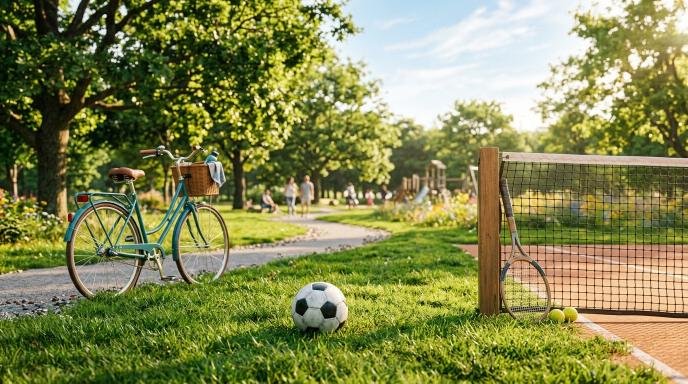
The word sports can describe organized physical activities, competitive games, athletic events, or recreational activities that involve skill, movement, exercise, and competition. Common examples include soccer, basketball, cricket, tennis, swimming, running, and many other activities. Because sports has a broad meaning, the best alternative depends on the exact context.
People often search for synonyms for sports when writing essays, websites, school assignments, articles, business content, or everyday messages. Words and phrases such as athletics, games, physical activities, recreation, competition, exercise, pastimes, and athletic activities can work in different situations, but they are not always interchangeable. This guide explains the differences so you can choose an alternative that matches your meaning, audience, and tone.
Quick Answer
The closest alternatives to sports include athletics, games, athletic activities, physical activities, recreation, competition, exercise, pastimes, and sporting activities. The best choice depends on context: athletics suits formal writing, games works for many competitive activities, and physical activities is broader.
Quick List of Synonyms for Sports
Closest Alternatives
- Athletics
- Sporting activities
- Athletic activities
- Games
- Competitions
- Physical activities
- Recreational activities
- Exercise
- Recreation
- Pastimes
Formal Alternatives
- Athletics
- Sporting activities
- Athletic pursuits
- Competitive activities
- Physical recreation
- Organized athletics
- Sporting competition
- Athletic competition
- Physical pursuits
- Recreational pursuits
Neutral Alternatives
- Games
- Activities
- Physical activities
- Recreation
- Exercise
- Competitions
- Outdoor activities
- Athletic events
- Team activities
- Fitness activities
Casual Alternatives
- Games
- Activities
- Hobbies
- Pastimes
- Outdoor fun
- Active hobbies
- Games and activities
Formal Alternatives for Sports
Athletics
Meaning: Physical activities and competitive events that require physical skill, strength, speed, or endurance.
Explanation: Athletics is one of the closest formal alternatives to sports. In some contexts, however, it can refer specifically to track and field.
Example: The university has a strong athletics program.
Best Use: Schools, universities, professional organizations, reports, and formal writing.
Worst Use: Avoid it when discussing non-physical games or activities that do not involve athletic performance.
Tone: Formal and professional.
Sporting Activities
Meaning: Activities involving sports, games, exercise, or athletic competition.
Explanation: This phrase is a broad and useful replacement for sports, especially in formal writing.
Example: The school encourages students to participate in sporting activities.
Best Use: Education, business, health, and formal communication.
Worst Use: It may sound unnecessarily formal in casual conversation.
Tone: Formal and neutral.
Athletic Activities
Meaning: Activities involving physical exercise, athletic ability, or sports.
Explanation: Athletic activities emphasizes physical performance rather than competition alone.
Example: Students can choose from several athletic activities after school.
Best Use: Education, fitness, healthcare, and professional writing.
Worst Use: It may not fit activities where physical movement is limited.
Tone: Formal and neutral.
Athletic Pursuits
Meaning: Physical activities or sports that someone chooses to practice or participate in.
Explanation: Pursuits gives the phrase a more formal tone and emphasizes participation as an interest or goal.
Example: He devoted much of his free time to athletic pursuits.
Best Use: Essays, biographies, formal articles, and professional writing.
Worst Use: It can sound overly polished in casual conversation.
Tone: Formal.
Competitive Activities
Meaning: Activities in which participants compete against one another.
Explanation: This phrase is broader than sports because competitions can include activities that are not physical.
Example: The event offers several competitive activities for students.
Best Use: Education, events, organizations, and formal descriptions.
Worst Use: Avoid it when the main point is physical activity rather than competition.
Tone: Formal and neutral.
Athletic Competition
Meaning: A contest involving physical skill or athletic performance.
Explanation: This phrase emphasizes the competitive side of sports.
Example: The school hosts an annual athletic competition.
Best Use: Tournaments, school events, professional athletics, and reports.
Worst Use: It is too narrow when discussing sports simply as recreational activities.
Tone: Formal.
Organized Athletics
Meaning: Structured athletic activities governed by rules, schedules, teams, or organizations.
Explanation: This phrase is useful when you want to emphasize that sports are formally organized.
Example: Organized athletics can help students develop teamwork and discipline.
Best Use: Schools, universities, clubs, and institutional writing.
Worst Use: It does not describe casual exercise very well.
Tone: Formal.
Physical Recreation
Meaning: Leisure activities involving physical movement.
Explanation: Physical recreation focuses more on leisure than competition.
Example: Parks provide opportunities for physical recreation.
Best Use: Public health, parks and recreation, education, and community writing.
Worst Use: It may not fit professional competitive sports.
Tone: Formal and neutral.
Recreational Pursuits
Meaning: Activities people participate in for enjoyment or leisure.
Explanation: This phrase is broader than sports and can include reading, travel, games, hobbies, and physical activities.
Example: Outdoor sports are popular recreational pursuits.
Best Use: Formal writing and lifestyle discussions.
Worst Use: Avoid it when you need a precise term for competitive athletics.
Tone: Formal.
Sporting Competition
Meaning: Organized competition involving athletes or teams.
Explanation: This phrase emphasizes the competitive event rather than sports as a general category.
Example: The city regularly hosts international sporting competitions.
Best Use: Events, tournaments, journalism, and formal writing.
Worst Use: It is not suitable when you are discussing sports as hobbies.
Tone: Formal and professional.
Semi-Formal and Neutral Alternatives
Games
Meaning: Activities played according to rules, often involving competition.
Explanation: Games can be a natural alternative to sports, especially for activities such as soccer, basketball, tennis, or baseball. However, games can also include board games and video games.
Example: The children spent the afternoon playing outdoor games.
Best Use: Everyday writing, schools, recreation, and general discussion.
Worst Use: Avoid it when you need to specifically emphasize athletic activity.
Tone: Neutral and accessible.
Physical Activities
Meaning: Activities that involve bodily movement.
Explanation: This is broader than sports. Walking, dancing, gardening, and exercise can all be physical activities without being sports.
Example: Schools should provide students with regular opportunities for physical activities.
Best Use: Health, education, fitness, and public information.
Worst Use: It is too broad if you mean organized competition.
Tone: Neutral.
Recreational Activities
Meaning: Activities done for enjoyment or relaxation during free time.
Explanation: Recreation can include sports but also covers many non-sporting hobbies.
Example: Swimming and cycling are popular recreational activities.
Best Use: Parks, schools, travel, wellness, and community programs.
Worst Use: It may sound too broad for professional competitive sports.
Tone: Neutral and professional.
Exercise
Meaning: Physical activity performed to improve or maintain fitness and health.
Explanation: Exercise is related to sports but is not a complete synonym. Someone can exercise without participating in a sport.
Example: Regular exercise can support overall health.
Best Use: Health, fitness, wellness, and everyday writing.
Worst Use: Do not use it when you specifically mean organized competitive games.
Tone: Neutral.
Recreation
Meaning: Activities done for enjoyment, relaxation, or leisure.
Explanation: Recreation is a broad category that includes many sports and physical activities.
Example: The community center offers sports and other forms of recreation.
Best Use: Public facilities, education, lifestyle writing, and formal communication.
Worst Use: Avoid it when you specifically mean professional athletics.
Tone: Neutral to formal.
Competitions
Meaning: Events in which individuals or teams compete to achieve a goal or result.
Explanation: Competitions emphasizes the contest rather than the activity itself.
Example: The school organizes several sports competitions each year.
Best Use: Tournaments, school events, professional sports, and journalism.
Worst Use: It is too narrow when discussing sports as casual activities.
Tone: Neutral.
Athletic Events
Meaning: Organized events involving athletes or athletic performance.
Explanation: This phrase works particularly well when referring to tournaments, meets, races, or other organized occasions.
Example: The city hosted several major athletic events.
Best Use: Event descriptions, news, schools, and formal writing.
Worst Use: It may sound unnatural for casual exercise.
Tone: Formal and neutral.
Fitness Activities
Meaning: Activities intended to support physical fitness or conditioning.
Explanation: Fitness activities overlap with sports but have a stronger focus on health and physical conditioning.
Example: The gym offers several fitness activities for beginners.
Best Use: Health, gyms, wellness websites, and workplace programs.
Worst Use: It does not necessarily imply competition.
Tone: Neutral.
Outdoor Activities
Meaning: Activities performed outside.
Explanation: Sports can be outdoor activities, but outdoor activities also include hiking, camping, walking, and sightseeing.
Example: Soccer and cycling are popular outdoor activities.
Best Use: Travel, recreation, schools, and lifestyle content.
Worst Use: Avoid it if you need to specifically identify organized sports.
Tone: Neutral and conversational.
Team Activities
Meaning: Activities performed by groups working together.
Explanation: This phrase highlights teamwork rather than physical competition.
Example: Team activities can help students practice communication skills.
Best Use: Schools, workplaces, youth programs, and team-building content.
Worst Use: It does not necessarily mean sports.
Tone: Neutral.
Athletic Events
Meaning: Organized activities or competitions involving physical performance.
Example: The university’s athletic events attract students from several departments.
Best Use: Universities, tournaments, event schedules, and reports.
Worst Use: Avoid it for informal exercise.
Tone: Neutral and formal.
Informal and Casual Alternatives
Games
Meaning: Fun or competitive activities played according to rules.
Example: We played a few games after school.
When It Sounds Natural: Casual conversations about sports and recreation.
When to Avoid It: When you need to distinguish athletic sports from board or video games.
Tone: Casual.
Activities
Meaning: Things people do for work, exercise, entertainment, or leisure.
Example: There are plenty of activities to enjoy at the park.
When It Sounds Natural: Casual and general conversations.
When to Avoid It: When precision is important.
Tone: Very broad and neutral.
Hobbies
Meaning: Activities people enjoy doing regularly in their free time.
Example: Sports can become rewarding hobbies.
When It Sounds Natural: Talking about personal interests.
When to Avoid It: Professional sports are not usually described simply as hobbies.
Tone: Casual.
Pastimes
Meaning: Activities people enjoy during their free time.
Example: Cricket is a popular pastime in many communities.
When It Sounds Natural: General conversations and descriptive writing.
When to Avoid It: Highly competitive professional sports may require a more precise term.
Tone: Casual to neutral.
Active Hobbies
Meaning: Hobbies that involve physical movement.
Example: Running and cycling are two of my favorite active hobbies.
When It Sounds Natural: Casual lifestyle conversations.
When to Avoid It: Academic or technical writing.
Tone: Casual.
Outdoor Fun
Meaning: Enjoyable activities performed outside.
Example: The camp gives children plenty of opportunities for outdoor fun.
When It Sounds Natural: Family, travel, recreation, and casual writing.
When to Avoid It: Formal reports or academic papers.
Tone: Casual.
True Synonyms vs. Contextual Alternatives
Not every word related to sports has exactly the same meaning. The difference becomes important when you are writing about athletics, fitness, recreation, or competition.
| Type | What It Means | Can It Replace “Sports”? |
|---|---|---|
| True synonym | A word with nearly the same core meaning | Often, depending on context |
| Near synonym | A closely related word with a small meaning difference | Sometimes |
| Contextual alternative | Works naturally in a particular situation | Only in suitable contexts |
| Broader expression | Includes sports plus other activities | Yes, when broader meaning is intended |
| Narrower expression | Refers to a specific part of sports | Only when that narrower meaning is intended |
For example, athletics is very close to sports, especially in formal settings. Physical activities is broader because it includes exercise and movement that may not be sports. Competitions is narrower in one sense because it focuses on contests rather than sports as a whole.
Business Writing
In business writing, sports often appears in employee wellness programs, sponsorships, event planning, marketing, and recreation.
Useful alternatives include:
- Athletic activities
- Recreational activities
- Fitness activities
- Sporting events
- Team activities
- Physical activities
Example:
The company encourages employees to participate in recreational activities that support an active lifestyle.
This works better than sports when the program includes activities beyond organized games.
Corporate Communication
Corporate communication may refer to sports in sponsorship announcements, employee programs, community projects, or company events.
Example:
Our organization supports local athletic programs through community partnerships.
Here, athletic programs sounds more specific and professional than simply saying sports.
For internal communication, simpler language is often clearer:
Employees can participate in several fitness and recreational activities this summer.
Academic Writing
In academic writing, the correct alternative depends on the subject.
Use athletics when discussing organized athletic programs.
Physical activity when discussing movement and health.
Use exercise when focusing on fitness or physical conditioning.
Competitive sports when competition is central to the research.
Example:
Regular physical activity is an important part of a healthy lifestyle.
This is more precise than saying:
Regular sports are an important part of a healthy lifestyle.
The second sentence could incorrectly suggest that only organized sports count.
Customer Service
Customer-service writing may use activities, recreational options, or sporting activities depending on the situation.
Example:
Our resort offers several recreational activities, including tennis, swimming, and cycling.
This is clearer than simply saying:
Our resort offers sports.
The broader phrase explains that the facility provides different kinds of leisure activities.
Legal Writing
Legal documents may use specific terms such as athletic activities, sporting events, recreational activities, or physical activities, depending on what a policy, contract, regulation, or agreement actually covers.
A legal document should not replace a defined term with a casual synonym simply to make the language more varied. If a contract defines “sporting activities,” changing it to “games” could unintentionally change the scope.
For legal documents, use the terminology defined by the relevant document and jurisdiction rather than relying on general synonym lists.
Email Communication
Professional emails can use different alternatives depending on their purpose.
Client email: sporting events, recreational activities
Internal email: sports, activities, fitness programs
School email: athletics, athletic activities
Event email: competitions, sporting events
Vendor email: athletic programs, sporting activities
The simplest accurate word is usually the strongest choice.
Email Examples
Client Communication
Subject: Recreational Activities for Your Event
Dear Mr. Wilson,
Thank you for asking about the activities available at our facility.
In addition to traditional sports, we offer several recreational activities, including cycling, swimming, and guided outdoor programs.
Please let us know if you would like a full list of available options.
Best regards,
Emily
Project Update
Subject: Update on the Athletic Program
Hi Daniel,
The school athletic program is moving ahead as planned. We have confirmed the schedule for the spring events and are now finalizing participant registration.
I will send the updated calendar once all dates have been confirmed.
Best,
Marcus
Academic Communication
Subject: Question About Physical Activity Research
Dear Professor Smith,
I am working on my assignment about physical activity and student well-being. I would like to clarify whether recreational activities such as cycling and swimming should be included alongside organized sports.
Thank you for your guidance.
Sincerely,
Olivia
Customer Service
Subject: Activities Available at the Resort
Hello,
Thank you for contacting us. Our resort offers several recreational activities, including tennis, swimming, cycling, and beach games.
Some activities require advance reservations, so we recommend checking the daily schedule when you arrive.
Kind regards,
Guest Services
Internal Workplace Email
Subject: Employee Fitness Activities
Hi Team,
We are organizing several fitness activities for employees next month. The schedule will include group walks, beginner fitness sessions, and recreational games.
Participation is optional, and employees can choose whichever activities fit their schedules.
Thanks,
Rachel
Vendor Communication
Subject: Athletic Event Equipment Requirements
Dear Mr. Khan,
We are preparing for the upcoming athletic events and would like to confirm the delivery schedule for the equipment.
Please confirm whether the full order can arrive by Friday afternoon.
Best regards,
James
Short Dialogue Examples
Workplace
Person A: What activities are planned for the company event?
Person B: We have several recreational activities, including a team relay and outdoor games.
Classroom
Person A: Is exercise the same as sports?
Person B: Not exactly. Exercise is broader and can include activities that are not competitive sports.
Customer Service
Person A: What can guests do besides swimming?
Person B: We offer several recreational activities, including tennis, cycling, and beach games.
Casual Conversation
Person A: What do you do in your free time?
Person B: I enjoy sports and a few other active hobbies.
Professional Discussion
Person A: Should the report say “sports” or “physical activities”?
Person B: “Physical activities” is more accurate because the report includes walking and exercise as well as sports.
How to Replace “Sports” in a Sentence
Example 1
Original: The school offers many sports.
Alternative: The school offers many athletic activities.
Why it works: Athletic activities sounds more formal and emphasizes physical participation.
Example 2
Original: Students should participate in sports.
Alternative: Students should participate in physical activities.
Why it works: Physical activities is broader and includes exercise that may not be a sport.
Example 3
Original: He enjoys sports in his free time.
Alternative: He enjoys recreational activities in his free time.
Why it works: Recreational activities emphasizes leisure rather than competition.
Example 4
Original: The city hosts several sports each year.
Alternative: The city hosts several sporting events each year.
Why it works: Sporting events is more appropriate when referring to organized occasions or competitions.
Example 5
Original: She has always been interested in sports.
Alternative: She has always been interested in athletics.
Why it works: Athletics gives the sentence a more formal tone and emphasizes athletic participation.
Example 6
Original: The program includes sports for children.
Alternative: The program includes recreational activities for children.
Why it works: The alternative works when the program contains both sports and other leisure activities.
Example 7
Original: The students competed in sports competitions.
Alternative: The students competed in athletic competitions.
Why it works: Athletic competitions emphasizes organized physical contests.
Example 8
Original: Sports can be a good way to stay active.
Alternative: Physical activity can be a good way to stay active.
Why it works: Physical activity is broader and avoids suggesting that only sports provide movement.
Example 9
Original: My favorite sports are hiking and cycling.
Alternative: My favorite outdoor activities are hiking and cycling.
Why it works: Hiking is generally considered an outdoor activity rather than a competitive sport, so the alternative is more accurate.
Example 10
Original: The community provides sports for older adults.
Alternative: The community provides fitness and recreational activities for older adults.
Why it works: The alternative can include exercise classes, walking groups, and leisure activities as well as sports.
Comparison Table
| Phrase | Tone | Meaning / Scope | Best Use | Example |
|---|---|---|---|---|
| Sports | Neutral | Organized physical games and activities | General writing | She enjoys sports. |
| Athletics | Formal | Organized physical competition or sports | Schools and institutions | He participates in athletics. |
| Sporting activities | Formal | Activities involving sports | Reports and programs | The center offers sporting activities. |
| Games | Neutral | Rule-based activities, often competitive | Everyday writing | They played several games. |
| Physical activities | Neutral | Any activity involving physical movement | Health and education | Children need physical activities. |
| Recreation | Formal/neutral | Leisure activities | Community and lifestyle | Sports are a form of recreation. |
| Exercise | Neutral | Physical activity for fitness | Health and wellness | Exercise supports fitness. |
| Competitions | Neutral | Contests between participants | Tournaments and events | The school hosts competitions. |
| Athletic events | Formal | Organized athletic occasions | Events and journalism | The city hosts athletic events. |
| Fitness activities | Neutral | Activities focused on physical fitness | Gyms and wellness | The center offers fitness activities. |
| Pastimes | Casual/neutral | Leisure activities | Personal interests | Cricket is a popular pastime. |
| Outdoor activities | Neutral | Activities performed outside | Travel and recreation | Cycling is an outdoor activity. |
Which Alternative Should You Choose?
For Formal Writing
Use athletics, sporting activities, athletic pursuits, or organized athletics when discussing sports in a formal setting.
For Business Communication
Use recreational activities, fitness activities, athletic programs, or sporting events based on the subject.
For Academic Writing
Choose physical activity when discussing movement and health, athletics for organized sports programs, and competitive sports when competition matters.
For Legal Writing
Use the exact terminology defined by the relevant document. Avoid casual substitutions such as games or fun activities.
For Professional Emails
Athletic activities, recreational activities, physical activities, and sporting events are useful depending on the context.
For Everyday Conversation
Sports, games, activities, and hobbies are usually natural.
For Casual Messages
Try games, activities, active hobbies, or outdoor fun when a relaxed tone is appropriate.
Grammar and Usage Guide
“Sport” and “Sports” Can Have Different Uses
In American English, sports is commonly used as a plural noun for multiple athletic activities.
Example:
I enjoy several sports.
Sport can also refer to a particular activity:
Soccer is a popular sport.
In some contexts, sport can also refer to sports as a general category, especially in formal or international usage.
“Sports” Is Usually a Noun
Use it as a noun:
Sports are popular among students.
Do not automatically treat sports as an adjective.
However, sports commonly modifies another noun:
sports equipment
sports medicine
sports facilities
sports programs
sports events
“Sporting” Is an Adjective
Use sporting to describe something connected with sports.
Examples:
sporting event
sporting goods
sporting activities
“Athletic” Is an Adjective
Use athletic before nouns.
Examples:
athletic performance
athletic program
athletic competition
athletic ability
Do not confuse athletics with athletic.
“Physical Activity” Is Usually Uncountable
When discussing the general concept, use:
Regular physical activity is important.
When referring to individual activities, you can use:
The program includes several physical activities.
“Sports” vs. “Exercise”
These terms overlap but are not identical.
Sports usually involve a specific activity, set of rules, or competitive structure.
Exercise generally refers to physical activity performed to improve or maintain fitness.
A person can exercise without playing a sport.
Natural Prepositions
Common combinations include:
- participate in sports
- compete in sports
- play sports
- be involved in athletics
- take part in sporting events
- practice a sport
- train for a competition
Correct:
She participates in sports.
Incorrect:
She participates on sports.
Common Mistakes to Avoid
1. Treating “Exercise” and “Sports” as Exact Synonyms
Exercise is broader. A workout is exercise but is not necessarily a sport.
2. Using “Athletics” for Every Physical Activity
Walking or gardening can be physical activities without being athletics.
3. Using “Games” When You Need a Specific Sports Meaning
Games can include board games and video games, so it may be too broad.
4. Confusing “Sporting” and “Sports”
Both are related, but their grammatical roles differ.
Sports equipment and sporting event are both natural phrases.
5. Using “Recreation” as an Exact Replacement
Recreation includes sports but also includes many non-sporting leisure activities.
6. Calling Every Competition a Sport
A competition can involve spelling, academic contests, or other activities that are not sports.
7. Using Overly Formal Vocabulary
Terms such as recreational pursuits may sound unnatural in a casual message.
8. Choosing a Broad Word When Precision Matters
If you mean organized athletic competition, physical activity may be too broad.
9. Ignoring Regional Usage
Words such as sport and sports can be used somewhat differently across varieties of English. Consider your audience.
When Not to Use “Sports”
When You Mean All Physical Movement
Use physical activity if your topic includes walking, exercise, stretching, or household movement.
When You Mean Leisure in General
Use recreation when your category includes hobbies and other leisure activities.
When You Mean Fitness Training
Use exercise or fitness activities if competition is not involved.
When You Mean a Specific Event
Use sporting event or athletic event when referring to a particular organized occasion.
When You Mean a Personal Hobby
Use pastime or hobby when the focus is personal leisure.
When You Need Academic Precision
Choose a term such as physical activity, competitive sport, athletics, or exercise according to your research topic.
When “Sports” Is Actually Better
Do not replace sports simply to avoid repeating a word. If you are discussing soccer, basketball, tennis, cricket, baseball, or similar activities as a category, sports is often the clearest and most natural choice.
Advanced Writer Tips
Tone Control
Use athletics or sporting activities for formal writing. Choose sports or games for general readers. Use hobbies or activities for casual conversation.
Professional Email Etiquette
Avoid unnecessarily complicated alternatives. A simple sentence such as:
“The event will include several sports and recreational activities.”
is often better than replacing every occurrence of sports with a more formal expression.
Politeness
The word itself is generally neutral, so politeness usually comes from the surrounding sentence rather than the synonym.
Compare:
Please participate in the sports program.
with:
You are welcome to participate in the sports program.
The second sounds more inviting because of the sentence structure.
Context Alignment
First decide what you mean:
- Organized competition → sports
- Athletic programs → athletics
- Movement and health → physical activity
- Fitness training → exercise
- Leisure → recreation
- Organized contests → competitions
- Outdoor leisure → outdoor activities
- Personal leisure → hobbies or pastimes
Precision
Do not choose a synonym merely because it sounds sophisticated. Physical activity may be more accurate than athletics if your topic includes walking and exercise.
Readability
Simple language is usually stronger for general audiences.
Instead of:
Participants engaged in recreational athletic pursuits.
write:
Participants took part in recreational sports.
The second sentence is easier to understand.
Related Questions
What is another way to say “sports”?
Common alternatives include athletics, sporting activities, games, physical activities, recreation, exercise, competitions, and athletic events. The best option depends on whether you mean competition, fitness, leisure, or organized athletics.
What is a professional alternative to “sports”?
Athletics, sporting activities, athletic activities, and recreational activities can work well in professional writing. Choose based on the exact meaning.
What is a formal alternative to “sports”?
Athletics, organized athletics, athletic pursuits, sporting activities, and competitive activities can provide a more formal tone.
What can I use instead of “sports” in an essay?
Use physical activity when discussing health or movement, athletics when discussing organized sports programs, or competitive sports when competition is central.
Is “sports” formal?
Sports is a neutral word, not an especially formal or informal one. It is appropriate in everyday conversation, professional communication, journalism, education, and many academic contexts.
Can “games” replace “sports”?
Sometimes. Many sports are games, but games also includes non-sport activities such as board games and video games. Use it only when the broader meaning is acceptable.
What is the difference between sports and athletics?
Sports is the broader everyday term for organized physical games and activities. Athletics often has a more formal tone and can refer broadly to competitive sports or specifically to track-and-field events, depending on context.
FAQs
What is the closest synonym for sports?
Athletics is one of the closest formal alternatives, while sporting activities is a broad phrase that can replace sports in many contexts. However, the best alternative depends on the sentence.
Is “physical activity” the same as sports?
No. Physical activity is broader. It includes sports but can also include walking, exercise, dancing, gardening, and other forms of movement.
Is “athletics” a synonym for sports?
Often, yes. Athletics can refer broadly to organized physical sports, especially in schools and institutions. In some contexts, however, it specifically refers to track and field.
What is a good synonym for sports in academic writing?
Physical activity is often appropriate for health-related academic writing, while athletics or competitive sports may be better for research focused on organized competition.
What is a casual way to say sports?
Depending on the sentence, games, activities, hobbies, or pastimes can work. However, sports itself is already a natural casual word.
What is the difference between sports and recreation?
Sports are a type of recreation, but recreation is broader. Recreation includes sports as well as hobbies, games, outdoor activities, and other forms of leisure.
Can “exercise” be used instead of sports?
Only in some contexts. Exercise focuses on physical conditioning or health, while sports often involve a specific activity, rules, skills, or competition.
Key Takeaways
- Sports is a broad, neutral term for organized physical activities and competitive games.
- Athletics is a close formal alternative, especially in schools, universities, and institutions.
- Physical activity is broader than sports and includes many forms of movement that are not competitive.
- Exercise, recreation, games, and competitions overlap with sports but emphasize different aspects.
- Choose your alternative based on meaning, audience, tone, and context rather than simply replacing the word for variety.
Conclusion
The best synonym for sports depends on what you want the sentence to communicate. Athletics is a close and more formal alternative, while sporting activities works well in professional and institutional writing. If you are talking about movement and health, physical activities may be more accurate. For leisure, recreation or pastimes can work, while exercise is better when the focus is fitness rather than competition.
Words such as games, competitions, athletic events, fitness activities, outdoor activities, and team activities can also replace sports in specific contexts, but each changes the focus slightly. The most effective writing does not use synonyms simply to avoid repetition. Instead, it selects the word that gives readers the clearest meaning. If you are writing about organized athletic activities in general, sports may still be the simplest and most natural choice.