
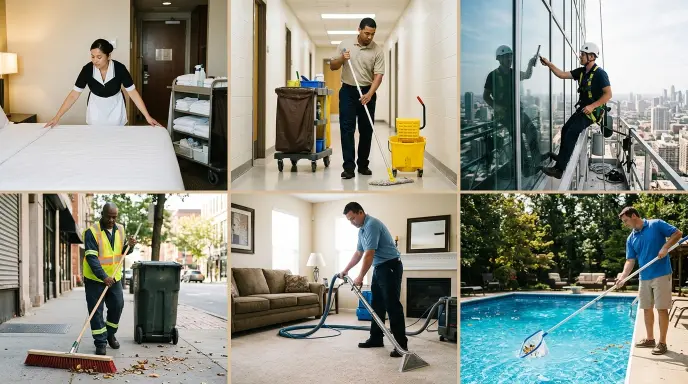
The word cleaner can describe a person who cleans, a product that removes dirt, or something that is more clean or less polluted. The best alternative depends on what you mean. For example, janitor may describe a person who maintains a building, detergent refers to a cleaning product, and more hygienic emphasizes cleanliness and health.
People search for synonyms for cleaner to improve their writing, avoid repetition, choose professional language, or find a more precise word for a specific situation. Understanding the differences between these terms helps you communicate clearly in emails, school assignments, business documents, product descriptions, and everyday conversations.
Quick Answer
The best synonyms for cleaner include janitor, cleaning professional, housekeeper, custodian, cleaning agent, detergent, disinfectant, tidier, more hygienic, and less polluted. The correct alternative depends on the meaning. Use custodian for building maintenance, detergent for a cleaning product, and tidier when describing a more organized space.
Quick List: Alternatives for Cleaner
Here are useful alternatives organized by meaning and tone.
Alternatives for a Person Who Cleans
- Cleaning professional
- Cleaner
- Janitor
- Custodian
- Housekeeper
- Cleaning worker
- Cleaning staff member
- Domestic cleaner
- Commercial cleaner
- Maintenance worker
- Housekeeping attendant
- Sanitation worker
Alternatives for a Cleaning Product
- Cleaning agent
- Cleaning solution
- Detergent
- Disinfectant
- Sanitizer
- Degreaser
- Solvent
- Cleaning fluid
- Stain remover
- Surface cleaner
These terms are related but not interchangeable. For example, a disinfectant targets certain microorganisms, while a degreaser removes grease.
Alternatives Meaning More Clean or Tidy
- Tidier
- Neater
- More spotless
- More hygienic
- More sanitary
- Less dirty
- Better maintained
- More organized
- Less cluttered
Alternatives Meaning Less Polluted or More Environmentally Friendly
- Less polluted
- Cleaner-burning
- Lower-emission
- Less contaminated
- More environmentally friendly
- More sustainable
These alternatives describe different environmental qualities. A lower-emission fuel, for example, is not necessarily pollution-free.
Formal Alternatives for Cleaner
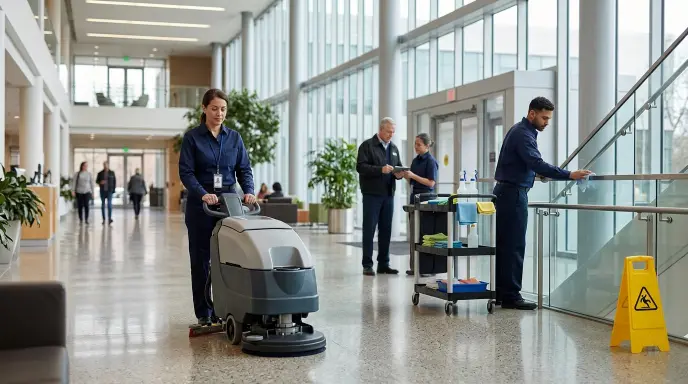
The most suitable formal alternative depends on whether you are discussing a worker, a product, a place, or an improvement in cleanliness.
1. Cleaning Professional
Meaning: A person trained or employed to provide cleaning services.
Explanation: This is a professional, respectful alternative to cleaner. It emphasizes the person’s work rather than using an informal job label.
Example: We hired a cleaning professional to prepare the office for the inspection.
Best Use: Business communication, service websites, job descriptions, and client-facing documents.
Worst Use: It may sound unnecessarily formal when talking casually about someone who cleans their own home.
Tone: Professional and respectful.
2. Custodian
Meaning: A person responsible for caring for and maintaining a building or facility.
Explanation: A custodian may clean, manage supplies, and perform basic maintenance. The word often describes school, office, and institutional staff.
Example: The school custodian prepared the classrooms before the new term.
Best Use: Schools, hospitals, offices, and other facilities.
Worst Use: Avoid it when you specifically mean a domestic cleaner who works in private homes.
Tone: Professional and institutional.
3. Janitor
Meaning: A person who cleans and maintains a building.
Explanation: Janitor is a close alternative to custodian, particularly in American English. The exact duties depend on the workplace.
Example: The janitor cleaned the hallways after the event.
Best Use: Schools, commercial buildings, and workplace descriptions.
Worst Use: It is not usually the best term for someone who sells cleaning products.
Tone: Neutral and occupational.
4. Housekeeping Attendant
Meaning: A worker who helps keep rooms and facilities clean.
Explanation: This term is common in hotels, resorts, and hospitality settings. It may refer to someone with duties beyond basic cleaning.
Example: The housekeeping attendant refreshed the guest room before check-in.
Best Use: Hotel policies, hospitality job listings, and workplace documents.
Worst Use: It may sound unnatural when describing a residential cleaning service.
Tone: Formal and service-oriented.
5. Sanitation Worker
Meaning: A worker who helps maintain sanitary conditions or manages waste and related services.
Explanation: This term has a broader public-health or waste-management focus than cleaner.
Example: Sanitation workers helped maintain safe conditions throughout the public facility.
Best Use: Municipal services, waste management, public facilities, and sanitation programs.
Worst Use: Avoid it if you mean someone who only dusts furniture or vacuums a home.
Tone: Formal and public-service focused.
6. Cleaning Agent
Meaning: A substance used to remove dirt, grease, or other unwanted material.
Explanation: This is a formal alternative when cleaner refers to a product rather than a person.
Example: Apply the cleaning agent according to the manufacturer’s instructions.
Best Use: Product documentation, technical writing, and workplace procedures.
Worst Use: Do not use it to describe a person who cleans.
Tone: Technical and neutral.
7. Cleaning Solution
Meaning: A liquid or prepared mixture used for cleaning.
Explanation: This term is useful when the product’s liquid form matters. It does not necessarily mean the product is a disinfectant.
Example: Use the recommended cleaning solution on the work surface.
Best Use: Instructions, product descriptions, and maintenance guides.
Worst Use: It may be inaccurate for a dry powder, brush, or other cleaning tool.
Tone: Practical and professional.
8. Detergent
Meaning: A substance designed to help remove dirt and grease.
Explanation: A detergent is a specific type of cleaning product, not a universal synonym for every cleaner.
Example: Choose a detergent suitable for delicate fabrics.
Best Use: Laundry instructions, dishwashing, and product comparisons.
Worst Use: Do not call a person a detergent or use the term for every disinfectant.
Tone: Technical and everyday.
9. Disinfectant
Meaning: A product intended to destroy or inactivate specified microorganisms on suitable surfaces or materials.
Explanation: A disinfectant does more than ordinary cleaning, but it must be used according to its label to achieve the intended result.
Example: The staff used an approved disinfectant on the high-touch surfaces.
Best Use: Healthcare, food-service procedures, and hygiene instructions.
Worst Use: Do not use it as a synonym for an ordinary detergent unless the product also has the relevant disinfecting function.
Tone: Technical and health-focused.
10. More Hygienic
Meaning: Cleaner in a way that supports better hygiene.
Explanation: This comparative phrase describes a condition or practice, not a person or product.
Example: The new storage system keeps cleaning supplies in a more hygienic environment.
Best Use: Health guidance, facility policies, and product comparisons.
Worst Use: Avoid it when you simply mean that a room looks neater. Appearance and hygiene are not the same.
Tone: Formal and health-conscious.
Semi-Formal and Neutral Alternatives
These words work well in everyday writing, professional emails, and general descriptions.
1. Housekeeper
Meaning: A person who cleans and maintains a home or other property.
Explanation: A housekeeper may also organize rooms, manage laundry, and perform other household duties.
Example: The housekeeper prepared the guest rooms before the visitors arrived.
Best Use: Domestic services and hospitality.
Worst Use: It may be too broad if the person only performs one specialized cleaning task.
Tone: Neutral and professional.
2. Cleaning Worker
Meaning: A person whose job includes cleaning.
Explanation: This is a straightforward description that works in many workplaces.
Example: Each cleaning worker received instructions before the shift began.
Best Use: Staff notices, workplace policies, and general reporting.
Worst Use: It can sound less polished than cleaning professional in premium service marketing.
Tone: Neutral and direct.
3. Maintenance Worker
Meaning: A person who helps keep buildings, equipment, or facilities in good condition.
Explanation: Cleaning may be one responsibility, but maintenance work often includes repairs and inspections.
Example: The maintenance worker checked the hallway and repaired a damaged fixture.
Best Use: Facility management and property operations.
Worst Use: Do not use it when the person’s role is limited to cleaning.
Tone: Professional and practical.
4. Neater
Meaning: More orderly or better arranged.
Explanation: Use neater when comparing the appearance or organization of two spaces.
Example: The desk looks neater after we organized the files.
Best Use: Home descriptions, schoolwork, and everyday conversation.
Worst Use: It does not necessarily mean that a surface is free from germs or dirt.
Tone: Neutral and conversational.
5. Tidier
Meaning: More organized and less cluttered.
Explanation: Tidier is especially suitable for rooms, desks, wardrobes, and other spaces with fewer misplaced items.
Example: The classroom looked tidier after the students put away their books.
Best Use: Informal writing, home organization, and school assignments.
Worst Use: Avoid it when the main concern is contamination or sanitation.
Tone: Friendly and neutral.
6. More Spotless
Meaning: More free from visible marks or dirt.
Explanation: Spotless is an absolute-sounding adjective, so spotless or closer to spotless is often more natural than more spotless.
Example: The team left the kitchen spotless after the event.
Best Use: Descriptive writing and cleaning service promotions.
Worst Use: Avoid claiming a space is spotless if you cannot support that description.
Tone: Descriptive and positive.
7. Sanitizer
Meaning: A product intended to reduce specified microorganisms to a defined level under its labeled conditions.
Explanation: A sanitizer differs from a general cleaning product. Its purpose and approved use depend on the product.
Example: The facility provided a surface sanitizer for the designated work areas.
Best Use: Hygiene procedures and product descriptions.
Worst Use: Do not assume every sanitizer is a disinfectant or removes visible dirt.
Tone: Technical and practical.
8. Degreaser
Meaning: A product designed to remove grease and oily residue.
Explanation: It is a specific type of cleaning product.
Example: The technician applied a suitable degreaser to the greasy equipment.
Best Use: Kitchens, workshops, machinery, and industrial cleaning.
Worst Use: It is not a general substitute for a glass cleaner or disinfectant.
Tone: Technical and direct.
9. Less Contaminated
Meaning: Containing fewer unwanted or harmful substances.
Explanation: This phrase focuses on contamination, which may not be visible to the eye.
Example: The revised process helped keep the sample less contaminated.
Best Use: Laboratory work, environmental reporting, and quality control.
Worst Use: Do not use it merely to say that a room looks tidy.
Tone: Technical and precise.
10. Better Maintained
Meaning: Kept in better condition through care and upkeep.
Explanation: A well-maintained building may be clean, repaired, and organized, but maintenance is broader than cleaning alone.
Example: The renovated facility is cleaner and better maintained than before.
Best Use: Property descriptions, facility reports, and workplace communication.
Worst Use: Avoid it when you need to describe a single cleaning task.
Tone: Professional and neutral.
Informal and Casual Alternatives
Casual language is useful in conversation and messages, but it does not always fit formal writing.
1. Tidier
Meaning: More organized and less cluttered.
Example: My room looks much tidier now.
When It Sounds Natural: Talking with friends or family about a space.
When to Avoid It: Technical hygiene reports.
Tone: Relaxed and friendly.
2. Neater
Meaning: More orderly in appearance.
Example: This arrangement looks neater than the old one.
When It Sounds Natural: Everyday comparisons and informal feedback.
When to Avoid It: Situations requiring precise information about sanitation.
Tone: Simple and neutral.
3. Less Messy
Meaning: Having less clutter or disorder.
Example: The kitchen is less messy after we put everything away.
When It Sounds Natural: Casual conversation about rooms, desks, or belongings.
When to Avoid It: Professional cleaning specifications where exact standards matter.
Tone: Informal and direct.
4. Picked Up
Meaning: Tidied by putting misplaced items away.
Example: The living room has been picked up before the guests arrive.
When It Sounds Natural: Informal conversation about household organization.
When to Avoid It: When you mean that a surface has been washed or disinfected.
Tone: Casual.
5. Spick-and-Span
Meaning: Very clean and neat.
Example: We got the guest room spick-and-span before the family arrived.
When It Sounds Natural: Friendly conversation and informal descriptive writing.
When to Avoid It: Formal reports, technical documents, and academic papers.
Tone: Cheerful and idiomatic.
True Synonyms vs. Contextual Alternatives

Not every alternative for cleaner means the same thing. Some describe a person, others identify a product, and still others describe the condition of an object or environment.
| Type | What It Means | Can It Replace the Original? |
|---|---|---|
| True or near synonym | A word with a similar meaning in the same context | Often, if the context matches |
| Near synonym | A word with overlapping meaning but a different emphasis | Sometimes |
| Contextual alternative | A word suited to a particular situation | Only in that context |
| Broader expression | A term covering several tasks or roles | When the wider meaning is intended |
| Narrower expression | A specific kind of person, product, or function | Only when that specific meaning applies |
For example, janitor can replace cleaner when referring to someone who cleans and maintains a school. Detergent can replace cleaner when referring to a suitable cleaning product. Tidier works when describing a more organized room, but it does not necessarily mean the room is more hygienic.
The safest approach is to identify the intended meaning before choosing an alternative.
Industry-Specific Usage
Business Writing
In business documents, use wording that clearly identifies the service, person, or task.
- Cleaning professional: We hired a cleaning professional to prepare the office.
- Cleaning service: The company contracted a cleaning service for the new branch.
- Cleaning solution: The team selected a suitable cleaning solution for the workstations.
Avoid using janitor as a catch-all term when the person’s official role includes wider facility responsibilities.
Corporate Communication
Corporate reports and internal policies often benefit from specific job titles and task descriptions.
Example: “The facilities team will inspect the shared areas and arrange professional cleaning as needed.”
This wording is more informative than simply saying, “The cleaner will handle everything.”
For policies, use the organization’s official job titles where available.
Academic Writing
Academic writing should favor precision over variety for its own sake.
- Use custodial staff when discussing building upkeep.
- Use cleaning agent when discussing a substance.
- Use more hygienic when comparing hygiene practices.
- Use less contaminated when discussing contamination.
Example: “The study compared two cleaning agents under controlled conditions.”
Do not substitute tidier for more hygienic unless organization and hygiene are genuinely the same point in your discussion.
Customer Service
Customer service messages should be clear, polite, and specific.
Example: “Our cleaning team will prepare the room before your arrival.”
This sounds professional without making the employee’s title the focus.
If a customer reports a problem, describe the action being taken rather than making unsupported claims about the result.
Legal and Policy Writing
Legal and policy documents require particular care because job titles, contractual duties, and defined terms may have specific meanings.
- Use the official role named in the contract.
- Use cleaning services when referring to the service being provided.
- Use sanitation only when the intended scope concerns sanitary conditions.
- Use disinfectant only when the product and its function justify that term.
Example: “The contractor shall provide the cleaning services described in Schedule A.”
This is more precise than replacing a defined contractual term with a loosely related word. The correct wording depends on the document and applicable rules.
Email Communication
Choose the alternative that matches the purpose of the email.
- Client email: “Our cleaning team will arrive at the agreed time.”
- Internal update: “The custodial staff completed the scheduled inspection.”
- Product request: “Please confirm which cleaning agent is approved for these surfaces.”
- Service complaint: “The room requires additional cleaning before it can be used.”
Specific wording helps recipients understand who is responsible and what action is expected.
Email Examples Using Alternatives for Cleaner
1. Client Communication
Hello Jordan,
Our cleaning team is scheduled to arrive at your office on Thursday at 6:00 p.m. Please let us know if access arrangements have changed.
Thank you for your cooperation.
Best regards,
Alex
2. Internal Workplace Update
Hi Team,
The custodial staff will service the meeting rooms on Friday afternoon. Please remove personal items and take any documents you need before the scheduled work begins.
Thanks,
Morgan
3. Request for a Cleaning Product
Hello Priya,
Could you confirm which cleaning agent is approved for the new work surfaces? We want to ensure that the selected product is compatible with the manufacturer’s care instructions.
Thank you,
Sam
4. Hotel Service Request
Hello,
Could you arrange for the housekeeping attendant to refresh Room 214 this afternoon? Please let me know the expected time.
Thank you for your help.
Best regards,
Taylor
5. Customer Service Follow-Up
Hello Ms. Lee,
Thank you for letting us know about the areas that were missed during the visit. We have shared your feedback with our cleaning professional and are reviewing the service details.
We will contact you with an update as soon as possible.
Kind regards,
Customer Support
Short Dialogue Examples
1. Workplace
Person A: Who is preparing the office before the meeting?
Person B: The cleaning professional is scheduled to arrive early.
2. Classroom
Person A: Why does the hallway look so tidy?
Person B: The custodian organized the area after school.
3. Customer Service
Person A: What product should we use on this surface?
Person B: Check the manufacturer’s instructions before choosing a cleaning agent.
4. Casual Conversation
Person A: Your desk looks different.
Person B: I made it neater by putting the papers away.
5. Professional Discussion
Person A: Does this product disinfect the equipment?
Person B: Not necessarily. We need to check the label to confirm its intended use.
How to Replace “Cleaner” in a Sentence
Example 1: Describing a Worker
Original: The cleaner arrived at 8 a.m.
Alternative: The cleaning professional arrived at 8 a.m.
Why it works: The alternative sounds more service-oriented and professional.
Example 2: Describing a School Employee
Original: The cleaner prepared the school hallway.
Alternative: The custodian prepared the school hallway.
Why it works: Custodian may better reflect the employee’s wider building responsibilities.
Example 3: Describing a Product
Original: Use a cleaner on the kitchen surface.
Alternative: Use a suitable cleaning agent on the kitchen surface.
Why it works: The revised sentence sounds more precise. The product must still be appropriate for that surface.
Example 4: Describing Laundry Products
Original: We need a stronger cleaner for the clothes.
Alternative: We need a more effective laundry detergent.
Why it works: Laundry detergent identifies the intended product. More effective describes performance without automatically implying that a stronger chemical is safer or better.
Example 5: Describing a Room
Original: The room looks cleaner now.
Alternative: The room looks tidier now.
Why it works: The alternative emphasizes organization and appearance, not necessarily the removal of dirt.
Example 6: Describing Hygiene
Original: This process makes the equipment cleaner.
Alternative: This process helps maintain more hygienic equipment.
Why it works: The new version emphasizes hygiene. Use it only if the process supports that claim.
Example 7: Describing Air Quality
Original: The new fuel is cleaner.
Alternative: The new fuel produces fewer emissions under the specified conditions.
Why it works: The alternative explains what cleaner means in this context. The claim should be supported by relevant evidence.
Example 8: Describing a Service
Original: We need a cleaner for the office.
Alternative: We need a commercial cleaning service for the office.
Why it works: The revised sentence focuses on obtaining a service rather than hiring an individual.
Example 9: Describing a Desk
Original: The desk is cleaner after organizing the files.
Alternative: The desk is less cluttered after organizing the files.
Why it works: Less cluttered is more accurate if the change involved organization rather than washing or dusting.
Example 10: Describing Water
Original: The water is cleaner after treatment.
Alternative: The treated water contains lower levels of the measured contaminants.
Why it works: The alternative is more precise, provided testing supports the statement. Treatment does not automatically make water safe to drink.
Comparison Table: Choosing the Right Alternative
| Phrase | Tone | Meaning or Scope | Best Use | Example |
|---|---|---|---|---|
| Cleaning professional | Professional | Person who cleans | Service descriptions | We hired a cleaning professional. |
| Custodian | Professional | Building care and upkeep | Schools and facilities | The custodian checked the hallway. |
| Janitor | Neutral | Building cleaning and maintenance | Offices and schools | The janitor cleaned the lobby. |
| Housekeeper | Neutral | Household or room upkeep | Homes and hotels | The housekeeper prepared the room. |
| Cleaning agent | Technical | Substance used for cleaning | Procedures | Apply the cleaning agent as directed. |
| Detergent | Neutral | Product for removing dirt and grease | Laundry and dishes | Use a suitable detergent. |
| Disinfectant | Technical | Product intended to control specified microorganisms | Hygiene procedures | Use the approved disinfectant. |
| Tidier | Casual | More organized | Rooms and desks | The desk looks tidier. |
| More hygienic | Formal | Better in terms of hygiene | Health and facilities | The process is more hygienic. |
| Less polluted | Technical | Lower pollution levels | Environment | The area is less polluted. |
| Better maintained | Professional | In better overall condition | Buildings and equipment | The facility is better maintained. |
Which Alternative Should You Choose?
For Formal Writing
Use cleaning professional, custodial staff, or cleaning agent, depending on whether you mean a person, a team, or a product.
For Business Communication
Choose cleaning service when discussing a contracted service and cleaning team when referring to the people performing the work.
For Academic Writing
Use specific terms such as detergent, disinfectant, more hygienic, or less contaminated. Select the word that accurately describes the process or result.
For Legal Writing
Use the job title or service description established in the relevant contract or policy. Avoid replacing defined terms with general synonyms.
For Professional Emails
Prefer clear expressions such as “our cleaning team,” “the custodial staff,” or “the approved cleaning product.”
For Everyday Conversation
Use cleaner, tidier, neater, or less messy according to what you want to describe.
For Casual Messages
Phrases such as picked up and spick-and-span can sound natural, particularly when discussing household chores.
Grammar and Usage Guide
1. Cleaner as a Noun
When cleaner refers to a person or product, it functions as a noun.
Examples:
- The cleaner arrived early.
- Please buy a cleaner for the glass.
- The cleaning professional completed the job.
The surrounding words help readers understand which meaning you intend.
2. Cleaner as a Comparative Adjective
Cleaner can also be the comparative form of clean.
Examples:
- This room is cleaner than the other one.
- The new process produces cleaner results.
- We need cleaner water.
In this use, it means more clean, not a person who cleans.
3. Cleaner Versus Cleaning
These words have different grammatical roles.
- Cleaner: a person, product, or comparative adjective.
- Cleaning: an activity or a word that describes something related to cleaning.
Examples:
- The cleaner arrived at noon.
- The cleaning took two hours.
- We purchased cleaning supplies.
4. Cleaner Versus Cleanser
A cleanser is a product used to clean something, often skin or a particular surface. The term is especially common in skincare.
Example: She chose a gentle facial cleanser.
Do not automatically replace cleaner with cleanser in every context.
5. Singular and Plural Forms
When referring to people, the plural of cleaner is cleaners.
Examples:
- One cleaner is assigned to the floor.
- Three cleaners are assigned to the building.
When referring to products, the plural can also be cleaners.
Example: The store sells several glass cleaners.
6. Comparative and Superlative Forms
The usual forms are:
- Clean
- Cleaner
- Cleanest
Example: This is the cleanest room in the building.
For related adjectives, use their natural forms:
- Neat → neater → neatest
- Hygienic → more hygienic → most hygienic
- Polluted → less polluted → least polluted
Avoid unnatural constructions such as “more cleaner.” Say “cleaner” or “much cleaner.”
7. Capitalization and Punctuation
The word cleaner is not normally capitalized unless it begins a sentence or appears in a title that follows title-case rules.
Correct: We need a cleaner for the office.
Correct: Cleaner Options for Glass Surfaces
In a job title, follow the style used by the employer or organization.
Common Mistakes to Avoid
1. Treating Every Alternative as an Exact Synonym
A detergent is a product, while a janitor is a person. Always match the alternative to the intended meaning.
2. Using “Tidier” to Mean “More Hygienic”
An organized room may still contain dirt or germs. Use hygiene-related wording only when that is what you mean.
3. Using “Disinfectant” for Every Cleaning Product
Not all cleaning products are designed to disinfect. Check the product’s stated purpose.
4. Choosing an Overly Formal Job Title
Cleaning professional may suit a service website, but cleaner may be perfectly natural in a casual conversation.
5. Using “Maintenance Worker” Too Broadly
A maintenance worker may repair equipment or inspect buildings. The title does not necessarily mean that the person performs cleaning duties.
6. Making Unsupported Environmental Claims
Calling a fuel or technology cleaner may imply a comparison. Explain the relevant emissions or pollutants and support the claim with evidence.
7. Writing “More Cleaner”
Because cleaner is already the comparative form of clean, write “much cleaner” or simply “cleaner.”
8. Repeating the Same Word Unnecessarily
Instead of using cleaner in every sentence, choose a precise alternative when the meaning changes. Do not replace it with a less accurate word just to avoid repetition.
When Not to Use “Cleaner”
The word cleaner is useful and often the best choice. However, another expression may be clearer in these situations.
1. When the Job Has a Specific Title
Use custodian, housekeeper, or another accurate job title when the person’s duties justify it.
2. When the Product Has a Specific Purpose
Use detergent, disinfectant, degreaser, or stain remover if you know which type of product is intended.
3. When You Mean Organization Rather Than Cleanliness
Use tidier, neater, or less cluttered to describe a more organized space.
4. When You Need Technical Precision
In scientific or environmental writing, describe the measured improvement rather than relying on the broad word cleaner.
5. When a Service Description Is More Useful
“Our cleaning team will visit on Tuesday” is often more informative than “The cleaner will visit.”
6. When the Word Could Create Confusion
If readers cannot tell whether you mean a person, a product, or a comparative adjective, choose a more specific expression.
When “Cleaner” Is the Better Choice
Keep the original word when its meaning is clear, the tone fits the audience, and a replacement would add unnecessary complexity.
For example, “This room is cleaner now” is simple and natural. There is no need to replace it with “This room exhibits an improved state of cleanliness” unless the context specifically requires technical wording.
Advanced Tips for Better Word Choice
Tone Control
Use cleaner for ordinary conversation, cleaning professional for client-facing services, and technical terms such as cleaning agent for instructions.
Professional Email Etiquette
Name the person, team, or task clearly. “The cleaning team will arrive at 6 p.m.” is more useful than “The cleaner will come later.”
Politeness
Job titles can affect tone, but respectful wording matters more than choosing the longest phrase. Avoid language that unnecessarily diminishes the value of someone’s work.
Context Alignment
Think about what the reader needs to know. A homeowner may want a housekeeper, while a facilities manager may need a custodian or commercial cleaning service.
Precision
Choose the term that identifies the actual function. A detergent removes dirt; a disinfectant targets specified microorganisms; a degreaser removes grease.
Readability
Prefer short, familiar words when they communicate the intended meaning. Technical language is helpful only when it makes the message more accurate.
Related Questions About Cleaner Synonyms
What Is Another Way to Say Cleaner?
You can say cleaning professional, janitor, custodian, or housekeeper when referring to a person. For a product, use cleaning agent, detergent, or disinfectant when appropriate. If you mean a more organized space, tidier or neater may work better.
What Is a Professional Alternative to Cleaner?
Cleaning professional is a useful professional alternative when referring to someone who provides cleaning services. Cleaning team works for a group, while custodial staff is suitable for many institutional settings.
What Is a Formal Word for Cleaner?
There is no single formal replacement for every meaning. Custodian or cleaning professional may describe a worker, while cleaning agent refers to a product. Choose based on the sentence.
What Can I Use Instead of Cleaner in a Sentence?
First, identify the intended meaning. Replace a worker with an accurate job title, a product with its specific type, or the comparative adjective with a word such as tidier or more hygienic when appropriate.
Is Cleaner a Formal or Informal Word?
Cleaner is a standard word that works in both formal and informal contexts. A more specific job title or product name may be preferable in professional, technical, or legal writing.
Can I Use Custodian Instead of Cleaner?
Yes, when referring to someone responsible for cleaning and maintaining a building. However, custodian may imply duties beyond cleaning, so it is not always interchangeable with cleaner.
What Is the Difference Between Cleaner and Cleanser?
Cleaner is a broad term for a person, a cleaning product, or something that is more clean. Cleanser usually refers to a product used to clean a surface or material, especially skin. The appropriate word depends on the product and context.
FAQs
1. What Is the Best Synonym for Cleaner?
The best synonym depends on the context. Use cleaning professional for a service worker, custodian for many building-maintenance roles, detergent for a suitable cleaning product, and tidier for a more organized space.
2. What Is a Fancy Word for Cleaner?
Cleaning professional is a polished alternative for a person who cleans. Custodial specialist may suit certain institutional roles, but it should only be used when it accurately describes the job.
3. What Is Another Word for a Person Who Cleans Houses?
Housekeeper, domestic cleaner, and residential cleaning professional are possible alternatives. Their meanings differ because some roles include laundry, organizing, or other household tasks.
4. What Is Another Word for a Cleaning Product?
Depending on its purpose, you can use cleaning agent, detergent, cleaning solution, degreaser, or disinfectant. Check the product’s intended use before selecting a term.
5. Is Tidier the Same as Cleaner?
No. Tidier means more organized or less cluttered. Cleaner usually means having less dirt or being more clean. A space can be tidy without being hygienic.
6. What Is the Difference Between a Janitor and a Custodian?
Both terms can describe people who clean and maintain buildings. Custodian often emphasizes responsibility for the facility, while janitor commonly refers to building cleaning and upkeep. Actual job duties vary by workplace.
7. How Can I Avoid Repeating Cleaner in an Article?
Use precise alternatives that match each sentence. For example, use cleaning professional for a service worker, detergent for a product, and tidier for an organized room. Repeating cleaner is better than using an inaccurate synonym.
Key Takeaways
- Match the meaning: Identify whether cleaner refers to a person, a product, or a comparative adjective.
- Use professional wording thoughtfully: Cleaning professional is suitable for many service-related contexts.
- Distinguish product types: Detergents, disinfectants, and degreasers have different purposes.
- Choose precise descriptions: Tidier describes organization, while more hygienic focuses on hygiene.
- Prioritize clarity: A familiar, accurate word is better than a complicated alternative that changes the meaning.
Conclusion
Choosing the right alternative for cleaner begins with understanding what the word means in your sentence. If you are referring to a person, options such as cleaning professional, custodian, janitor, and housekeeper can help you describe the role more accurately. If you mean a product, terms such as cleaning agent, detergent, disinfectant, and degreaser identify different functions. When describing a space or condition, tidier, neater, more hygienic, and less contaminated offer more specific meanings.
The tone also matters. Professional documents may benefit from precise job titles, while everyday conversations often work best with simple language. In technical and academic writing, avoid choosing a synonym merely for variety; accuracy should come first. Remember that cleanliness, organization, hygiene, and environmental impact are related but distinct concepts. By considering the subject, audience, and intended meaning, you can select a word that sounds natural, communicates clearly, and preserves the point you want to make.