
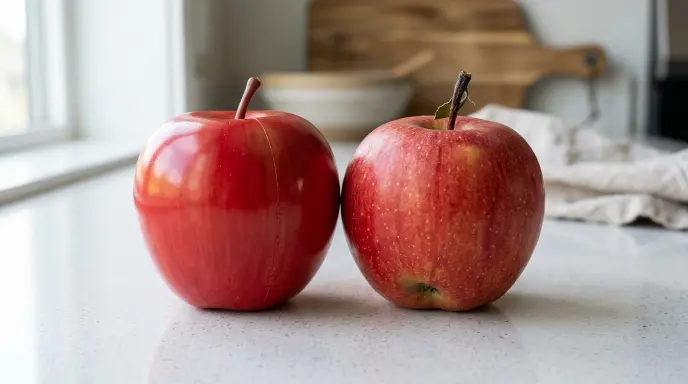
The word “faux” describes something designed to look like another thing without being the genuine article. It is commonly used for materials, fashion, furniture, finishes, decorations, and styles, such as faux leather, faux fur, faux wood, and faux marble. Unlike the blunt word “fake,” “faux” often sounds more polished and neutral.
Finding the right synonym depends on what you mean. Imitation is useful for something made to resemble an original, synthetic fits manufactured materials, replica works for a copied object, and simulated describes something designed to reproduce an appearance or experience. Meanwhile, counterfeit has a much narrower meaning because it usually involves unauthorized imitation intended to pass as genuine.
Quick Answer
The best synonyms for “faux” include imitation, artificial, synthetic, simulated, replica, reproduction, mock, substitute, ersatz, fake, manufactured, non-genuine, and counterfeit. Use imitation as a general alternative, synthetic for manufactured materials, replica for copied objects, and fake for informal situations.
Quick List of Synonyms for Faux
Closest Alternatives
- Imitation
- Artificial
- Fake
- Synthetic
- Simulated
- Replica
- Reproduction
- Mock
- Substitute
- Man-made
Formal Alternatives
- Artificial
- Synthetic
- Imitation
- Simulated
- Reproduction
- Manufactured
- Fabricated
- Non-genuine
- Counterfeit
- Ersatz
Neutral Alternatives
- Imitation
- Replica
- Artificial
- Synthetic
- Substitute
- Man-made
- Simulated
- Manufactured
- Decorative
- Alternative
Casual Alternatives
- Fake
- Copy
- Knockoff
- Phony
- Pretend
- Look-alike
- Made-up
Formal Alternatives to “Faux”

Artificial
Meaning: Made or produced by people rather than occurring naturally.
Explanation: “Artificial” is one of the broadest alternatives to “faux.” It works well when something is designed to imitate a natural material, appearance, or quality.
Example: The office uses artificial plants to brighten the reception area.
Best Use: Professional writing, product descriptions, technical contexts, and general explanations.
Worst Use: When you specifically mean an unauthorized branded copy.
Tone: Neutral and professional.
Synthetic
Meaning: Made through human-controlled chemical or industrial processes.
Explanation: “Synthetic” is especially useful for materials such as synthetic leather, synthetic fibers, and synthetic fabrics. It describes how something is produced rather than claiming that it is deceptive.
Example: The company developed a synthetic material that resembles natural leather.
Best Use: Fashion, manufacturing, textiles, science, and product descriptions.
Worst Use: Describing a fake identity, document, or branded product.
Tone: Technical and neutral.
Imitation
Meaning: Something designed to look or behave like another thing.
Explanation: “Imitation” is one of the closest general alternatives to “faux.” It emphasizes resemblance without automatically suggesting dishonesty.
Example: The restaurant uses imitation marble on the counters.
Best Use: Fashion, retail, interior design, product descriptions, and general writing.
Worst Use: When the important issue is that a product illegally uses another company’s brand.
Tone: Neutral and descriptive.
Simulated
Meaning: Made to reproduce the appearance, behavior, or effect of something real.
Explanation: “Simulated” is useful when something recreates an appearance or experience rather than simply copying a physical object.
Example: The training center uses a simulated emergency environment.
Best Use: Technical writing, training, software, design, and professional contexts.
Worst Use: Simple everyday descriptions where “imitation” would be easier to understand.
Tone: Formal and precise.
Reproduction
Meaning: A copy or recreated version of an original.
Explanation: “Reproduction” is particularly useful for artwork, furniture, historical objects, and decorative pieces. It usually sounds neutral rather than deceptive.
Example: The museum displayed a reproduction of the original sculpture.
Best Use: Art, museums, antiques, history, and design.
Worst Use: When you need to emphasize deliberate deception.
Tone: Formal and neutral.
Manufactured
Meaning: Made by people, usually through a production process.
Explanation: “Manufactured” can describe faux products when the focus is on how they were produced. However, it is broader than “faux,” because many manufactured products are completely genuine.
Example: The company sells manufactured stone for residential construction.
Best Use: Manufacturing, construction, business, and technical writing.
Worst Use: As a direct replacement whenever imitation is the main idea.
Tone: Professional and neutral.
Fabricated
Meaning: Made or constructed rather than naturally occurring.
Explanation: “Fabricated” can sometimes describe artificial materials or manufactured objects. However, it also means invented or made up, so the context must be clear.
Example: The display uses fabricated materials designed to resemble natural stone.
Best Use: Manufacturing, engineering, and technical writing.
Worst Use: Situations where readers may interpret it as “invented” or “untrue.”
Tone: Formal and technical.
Non-Genuine
Meaning: Not authentic or not truly what it claims to be.
Explanation: “Non-genuine” directly focuses on authenticity. It is useful in quality control and formal communication.
Example: The inspection found several non-genuine replacement parts.
Best Use: Business, quality control, authentication, and formal reports.
Worst Use: Friendly marketing copy where the wording may sound unnecessarily negative.
Tone: Formal and direct.
Counterfeit
Meaning: An unauthorized imitation that is made or presented as an authentic product.
Explanation: “Counterfeit” is not a general synonym for “faux.” It is much narrower and often relates to branded products, money, documents, or goods intended to deceive.
Example: Customs officials intercepted counterfeit designer products.
Best Use: Consumer protection, commerce, law enforcement, and formal reporting.
Worst Use: Describing ordinary faux leather, faux wood, or decorative imitation materials.
Tone: Formal and strongly negative.
Ersatz
Meaning: An artificial or inferior substitute for something genuine.
Explanation: “Ersatz” is a less common but useful formal word. It often suggests that the substitute is inferior to the original.
Example: The critic described the restaurant’s décor as ersatz luxury.
Best Use: Literary writing, criticism, commentary, and sophisticated descriptive prose.
Worst Use: Simple product descriptions for general audiences.
Tone: Formal, literary, and sometimes negative.
Mock
Meaning: Made to resemble something else, often for demonstration, practice, or appearance.
Explanation: “Mock” can overlap with “faux” in phrases such as mock-up, mock structure, or mock environment. However, it does not always mean fake.
Example: The designer created a mock version of the storefront before construction began.
Best Use: Design, planning, training, presentations, and development.
Worst Use: Luxury product descriptions where “mock” may sound too casual.
Tone: Neutral to informal.
Semi-Formal and Neutral Alternatives
Replica
Meaning: A copy made to resemble an original object.
Explanation: “Replica” focuses on physical similarity. It does not necessarily suggest deception.
Example: The exhibition includes a replica of an ancient vehicle.
Best Use: Museums, collectibles, historical objects, furniture, and design.
Worst Use: Describing a material such as faux leather when material composition is the main concern.
Tone: Neutral and descriptive.
Man-Made
Meaning: Created by humans rather than naturally occurring.
Explanation: “Man-made” can describe materials that imitate natural products, but it is broader than “faux.”
Example: The countertop is made from a man-made stone material.
Best Use: Construction, materials, environmental writing, and everyday explanations.
Worst Use: When you specifically need to say that something copies the appearance of another product.
Tone: Neutral.
Substitute
Meaning: Something used instead of another thing.
Explanation: “Substitute” emphasizes function rather than appearance. A faux product may serve as a substitute for a genuine one, but the terms are not identical.
Example: The designer chose a synthetic substitute for natural leather.
Best Use: Business, products, materials, food, and practical writing.
Worst Use: When imitation of appearance is the main point.
Tone: Neutral and practical.
Alternative
Meaning: Another option that can be used instead of something else.
Explanation: “Alternative” is broader than “faux.” It can describe a replacement without suggesting that the replacement imitates the original.
Example: The company offers an alternative to traditional leather.
Best Use: Business writing, marketing, sustainability content, and general communication.
Worst Use: When you specifically need to communicate visual imitation.
Tone: Neutral and flexible.
Decorative
Meaning: Mainly intended to improve appearance.
Explanation: “Decorative” may describe faux materials used for visual effect, but it does not mean “fake” by itself.
Example: The room features decorative wood panels.
Best Use: Interior design, architecture, home décor, and product descriptions.
Worst Use: When authenticity or imitation is the central issue.
Tone: Neutral and positive.
Engineered
Meaning: Designed and produced for a particular purpose.
Explanation: “Engineered” is useful for manufactured materials designed to reproduce certain qualities of natural materials. It is not a direct synonym for “faux.”
Example: The kitchen features engineered stone countertops.
Best Use: Architecture, construction, manufacturing, and technical writing.
Worst Use: As a general replacement for every use of “faux.”
Tone: Professional and technical.
Look-Alike
Meaning: Something that closely resembles another thing.
Explanation: “Look-alike” focuses on appearance. It does not tell the reader whether the material is synthetic, artificial, or counterfeit.
Example: The retailer sells a look-alike version of the popular chair.
Best Use: Casual product descriptions and everyday speech.
Worst Use: Academic, legal, and highly formal writing.
Tone: Casual.
Decorative Imitation
Meaning: A decorative item or material made to resemble another material or object.
Explanation: This phrase can work well for faux brick, faux stone, faux wood, and similar design features.
Example: The wall is finished with decorative imitation brick.
Best Use: Interior design, architecture, home décor, and renovation writing.
Worst Use: Technical contexts where the exact composition needs to be identified.
Tone: Neutral and descriptive.
Artificial Substitute
Meaning: A manufactured replacement for something natural or genuine.
Explanation: This phrase combines two ideas: artificial production and replacement. It is useful when both characteristics matter.
Example: The product uses an artificial substitute for natural fur.
Best Use: Product descriptions, materials writing, and explanatory content.
Worst Use: When a shorter word such as “synthetic” communicates the same idea more clearly.
Tone: Neutral and explanatory.
Informal and Casual Alternatives
Fake
Meaning: Not genuine or real.
Example: The watch looked expensive, but it was fake.
When it sounds natural: Everyday conversation and straightforward explanations.
When to avoid it: Professional product descriptions, luxury marketing, or situations where “imitation” sounds more accurate.
Tone: Direct and sometimes negative.
Knockoff
Meaning: An inexpensive copy of a popular product or design.
Example: He bought a knockoff version of the designer shoes.
When it sounds natural: Casual conversations about clothing, accessories, electronics, and consumer goods.
When to avoid it: Legal, academic, and formal business writing.
Tone: Informal and often negative.
Copy
Meaning: Something made to resemble another thing.
Example: This jacket is a copy of the original design.
When it sounds natural: Everyday speech and simple writing.
When to avoid it: Formal writing where “replica” or “imitation” is more precise.
Tone: Casual and neutral.
Phony
Meaning: Fake, false, or not genuine.
Example: The reviews on the website looked phony.
When it sounds natural: Informal speech and conversational writing.
When to avoid it: Professional, academic, and legal contexts.
Tone: Casual and negative.
Look-Alike
Meaning: Something that resembles another thing.
Example: I found a look-alike version of the chair for much less money.
When it sounds natural: Shopping conversations and casual writing.
When to avoid it: Formal product documentation.
Tone: Casual and descriptive.
Pretend
Meaning: Intended to seem real for play, imagination, or informal purposes.
Example: The children built a pretend store in the classroom.
When it sounds natural: Children’s activities and casual conversation.
When to avoid it: Professional or technical writing.
Tone: Casual and playful.
True Synonyms vs. Contextual Alternatives
“Faux” generally communicates imitation or artificial appearance, but its alternatives differ in precision. The safest general replacement is often imitation, while material-focused contexts may call for synthetic. For objects, replica may be better, and for unauthorized branded copies, counterfeit is more accurate.
| Type | What It Means | Can It Replace “Faux”? |
|---|---|---|
| True synonym | A very close term for something artificial or imitative | Often |
| Near synonym | Similar meaning with a different emphasis | Sometimes |
| Contextual alternative | Works naturally in one specific situation | Yes, in that context |
| Broader expression | Covers more things than “faux” | Sometimes |
| Narrower expression | Refers to one specific kind of imitation | Only when accurate |
| Formal equivalent | More technical or formal wording | Often |
| Casual equivalent | Informal way to describe something as not genuine | In casual contexts |
For instance, fake is close in meaning but usually more negative. Imitation is more neutral. Synthetic identifies a manufactured material. Replica normally refers to an object copied from an original. Counterfeit should not be used casually because it can imply unauthorized or deceptive copying.
Industry-Specific Usage

Business Writing
Business writing should usually favor precise, neutral language.
Useful alternatives include:
- Imitation
- Synthetic
- Artificial
- Substitute
- Non-genuine
- Replica
- Manufactured
Example:
The supplier offers a synthetic alternative to traditional leather.
This is clearer and more professional than calling the material “fake leather” in a formal report.
Corporate Communication
Corporate reports and internal documents should explain exactly what is artificial or imitative.
Example:
The company has introduced synthetic alternatives to several natural materials.
For quality concerns:
The inspection identified non-genuine components in several units.
This wording is more precise than simply calling the components “fake.”
Academic Writing
Academic writing benefits from specific terminology.
Use:
- Synthetic for manufactured materials
- Artificial for human-created alternatives
- Simulated for reproduced conditions or experiences
- Imitation for copied appearance
- Reproduction for recreated objects or works
Example:
The study compared natural fibers with synthetic alternatives.
Avoid “fake” unless you are discussing informal language or deliberate falsification.
Customer Service
Customer service communication should be clear without unnecessarily accusing a customer or product of being “fake.”
Instead of:
Your item is fake.
a professional response might be:
Our inspection indicates that the item may not be genuine.
Or:
The product does not appear to match the manufacturer’s authentic specifications.
This approach is more careful when authenticity has not been fully established.
Legal Writing
Legal contexts require special care because words such as counterfeit, fraudulent, unauthorized, and non-genuine can have different implications depending on the situation and jurisdiction.
For example:
The investigation concerned allegedly counterfeit goods.
“Counterfeit” is much more specific than “faux.” A faux leather product is not automatically counterfeit simply because it imitates leather.
Email Communication
Professional emails usually work best with simple, accurate alternatives.
Examples:
- “The item is made from synthetic leather.”
- “We identified a non-genuine component.”
- “The artwork is a reproduction.”
- “The design uses imitation stone.”
- “Please confirm whether the product is an authentic original.”
Email Examples
Client Communication
Subject: Material Specification for Your Order
Dear Ms. Carter,
Thank you for asking about the material used in the new collection.
The bags are made with synthetic leather, designed to provide a similar appearance and feel to traditional leather.
Please let me know if you would like the full material specification.
Best regards,
Daniel
Product Update
Subject: Updated Product Description
Hi Team,
I have updated the product page to describe the surface as imitation marble rather than simply calling it faux marble.
This wording gives customers a clearer idea of what the product is designed to resemble.
Thanks,
Emma
Customer Service
Subject: Your Product Authenticity Question
Hello James,
Thank you for contacting us.
Based on the information currently available, we cannot confirm that the item is genuine. We recommend checking the manufacturer’s serial number before making a final determination.
Please let us know if you need help with the verification process.
Kind regards,
Customer Support
Academic Communication
Subject: Question About the Museum Exhibit
Dear Professor Wilson,
I noticed that the exhibit description identifies the displayed sculpture as a reproduction rather than an original.
Would it be appropriate to use the term “reproduction” throughout my paper, or should I describe it as an imitation of the original work?
Thank you,
Maya
Internal Workplace Email
Subject: Materials for the New Display
Hi everyone,
The design team has confirmed that the display will use synthetic materials instead of natural stone.
The new materials should provide a similar visual effect while keeping the display easier to maintain.
Best,
Alex
Vendor Communication
Subject: Product Verification Request
Hello Mr. Khan,
Before we complete the order, could you please confirm whether the products are authentic originals or replicas?
Please include the relevant product documentation with your response.
Kind regards,
Michael
Short Dialogue Examples
Workplace
Person A: Is this real leather?
Person B: No. It’s synthetic leather designed to look similar to natural leather.
Classroom
Person A: Is the sculpture original?
Person B: No, it’s a reproduction of the original work.
Customer Service
Person A: Are you saying my item is fake?
Person B: We haven’t confirmed that. We only found information suggesting that it may be non-genuine.
Casual Conversation
Person A: Did you buy the designer bag?
Person B: No, just a knockoff. It looks similar, though.
Professional Discussion
Person A: What should we call the stone on the wall?
Person B: Since it isn’t natural stone but is designed to resemble it, imitation stone would be accurate.
How to Replace “Faux” in a Sentence
Example 1
Original: The sofa is made from faux leather.
Alternative: The sofa is made from synthetic leather.
Why it works: “Synthetic” is more specific about the material and works well in product descriptions.
Example 2
Original: The hotel has faux marble countertops.
Alternative: The hotel has imitation marble countertops.
Why it works: “Imitation” clearly tells readers that the material is designed to resemble marble.
Example 3
Original: She bought a faux designer bag.
Alternative: She bought a replica designer bag.
Why it works: “Replica” focuses on the bag’s resemblance to an original. If it is illegally presented as authentic, “counterfeit” may be more precise.
Example 4
Original: The store sells faux fur coats.
Alternative: The store sells artificial fur coats.
Why it works: “Artificial” clearly contrasts the material with natural fur.
Example 5
Original: The museum displayed a faux painting.
Alternative: The museum displayed a reproduction of the painting.
Why it works: “Reproduction” is more appropriate for a recreated artwork and sounds neutral.
Example 6
Original: The room has faux wood walls.
Alternative: The room has imitation wood wall panels.
Why it works: “Imitation” explains that the panels are designed to resemble wood.
Example 7
Original: The company offers faux stone.
Alternative: The company offers engineered stone.
Why it works: “Engineered” may be appropriate when the material is manufactured for specific performance and appearance. It should only be used if technically accurate.
Example 8
Original: He was selling faux designer watches.
Alternative: He was selling counterfeit designer watches.
Why it works: “Counterfeit” is more precise if the watches use unauthorized branding and are presented as genuine.
Example 9
Original: The website uses faux reviews.
Alternative: The website uses fabricated reviews.
Why it works: “Fabricated” clearly communicates that the reviews were created rather than genuine customer feedback.
Example 10
Original: The company created a faux version of the original product.
Alternative: The company created an imitation version of the original product.
Why it works: “Imitation” keeps the meaning neutral without automatically suggesting dishonesty.
Comparison of Common Alternatives
| Phrase | Tone | Meaning / Scope | Best Use | Example |
|---|---|---|---|---|
| Imitation | Neutral | Designed to resemble another thing | Products and materials | Imitation leather |
| Artificial | Neutral | Made rather than natural | Materials and objects | Artificial flowers |
| Synthetic | Technical | Manufactured material | Textiles and products | Synthetic fabric |
| Replica | Neutral | Copy of a particular object | Art and collectibles | Replica statue |
| Simulated | Formal | Reproduces an appearance or condition | Training and technology | Simulated environment |
| Reproduction | Formal | Recreated version of an original | Art and history | Reproduction painting |
| Fake | Casual | Not genuine | Everyday speech | Fake jewelry |
| Knockoff | Informal | Cheap or unauthorized-looking copy | Consumer goods | Knockoff shoes |
| Counterfeit | Formal | Unauthorized imitation presented as genuine | Branded goods | Counterfeit watch |
| Ersatz | Formal | Substitute, often inferior | Literary or critical writing | Ersatz luxury |
| Mock | Neutral | Model or imitation for a purpose | Design and planning | Mock-up |
| Substitute | Neutral | Replacement for something else | Materials and products | Leather substitute |
Which Alternative Should You Choose?
For Formal Writing
Choose artificial, synthetic, imitation, simulated, reproduction, or non-genuine according to the exact meaning.
For Business Communication
Use synthetic, imitation, artificial, substitute, or non-genuine. These terms are generally clearer than “fake.”
For Academic Writing
Use synthetic for materials, simulated for reproduced conditions, imitation for copied appearance, and reproduction for recreated objects or works.
For Legal Writing
Use terms such as counterfeit, unauthorized, non-genuine, or fraudulent only when they accurately describe the situation. These words should not be treated as interchangeable.
For Professional Email
Choose clear wording such as synthetic, imitation, reproduction, replica, or non-genuine.
For Everyday Conversation
Fake, imitation, copy, and artificial are usually natural choices.
For Casual Messages
Fake, knockoff, copy, and look-alike work well when the context is informal.
Grammar and Usage Guide
“Faux” Is Usually an Adjective
“Faux” normally functions as an adjective before a noun.
Examples:
- Faux leather
- Faux fur
- Faux wood
- Faux marble
- Faux finish
- Faux flowers
It tells readers that the following noun is designed to imitate something genuine or natural.
“Faux” Is Usually Not Used as a Verb
You would not normally say:
The company fauxed the leather.
Instead, say:
The company made the leather look artificial.
or:
The company created an imitation leather material.
Common “Faux + Noun” Combinations
Natural combinations include:
- Faux leather
- Faux fur
- Faux wood
- Faux marble
- Faux stone
- Faux finish
- Faux flowers
- Faux suede
- Faux jewelry
- Faux painting
Faux vs. Fake
“Faux” and “fake” overlap, but their tones differ.
Faux leather sounds neutral and product-focused.
Fake leather sounds more direct and can carry a negative tone.
This distinction matters in marketing and professional writing.
Faux vs. Artificial
“Artificial” often describes something made by humans rather than naturally occurring.
artificial flowers
“Faux” more strongly suggests that something is designed to resemble another material or style.
faux marble
Faux vs. Synthetic
“Synthetic” is usually more specific about material production.
synthetic leather
“Faux” focuses more on the imitation or appearance.
faux leather
Capitalization
“Faux” is normally lowercase unless it begins a sentence or appears in a proper name.
Correct:
The store sells faux leather bags.
Not usually:
The store sells Faux leather bags.
Plural Forms
“Faux” itself does not change for plural nouns.
- One faux leather bag
- Two faux leather bags
- One faux flower
- Several faux flowers
The noun changes, not “faux.”
Common Mistakes to Avoid
Treating Every Alternative as an Exact Synonym
“Faux,” “synthetic,” “replica,” and “counterfeit” have different meanings. Choose based on context.
Using “Counterfeit” for Ordinary Faux Materials
Faux leather is not automatically counterfeit. “Counterfeit” usually involves unauthorized imitation, especially when authenticity or branding is involved.
Using “Synthetic” for Everything Artificial
A synthetic material is manufactured through particular processes. Not every artificial object is properly described as synthetic.
Using “Fake” in Formal Product Copy
“Fake” can sound blunt or negative. “Imitation,” “artificial,” or “synthetic” may be more suitable.
Confusing “Replica” With “Counterfeit”
A replica can be openly identified as a copy. A counterfeit product is generally associated with unauthorized imitation or deceptive presentation.
Using “Man-Made” as a Perfect Replacement
Something can be man-made without imitating anything. The term is broader than “faux.”
Overusing Technical Vocabulary
Words such as “synthetic,” “engineered,” and “fabricated” should only be used when they add useful information.
Ignoring Audience
“Knockoff” may sound natural in a casual conversation but inappropriate in a formal report.
Using “Faux” When the Material Is Simply Artificial
If the reader needs to know how a material is manufactured, synthetic may communicate more useful information than “faux.”
When Not to Use “Faux”
When You Need a Technical Material Description
Use synthetic or another specific material term if the manufacturing process matters.
When You Need to Identify an Exact Copy
Use replica or reproduction when the object itself is copied.
When Authenticity Is the Main Issue
Use genuine, authentic, non-genuine, or another precise term rather than relying on “faux.”
When There Is Potential Legal or Consumer Deception
If a product is allegedly being presented as authentic when it is not, terms such as counterfeit or unauthorized may be more precise, depending on the facts.
When Writing for a General Audience
“Fake” or “imitation” may be easier to understand than “ersatz” or “fabricated.”
When the Original Word Is Already Clear
There is no need to replace “faux” simply for variety. If “faux leather” is the standard and clearest product term, keeping it may be the best choice.
Advanced Writer Tips
Tone Control
Use faux or imitation for a polished neutral tone. Choose synthetic for a technical tone and fake for direct informal language.
Professional Email Etiquette
Avoid language that sounds accusatory unless the facts are established.
Instead of:
“The customer bought a fake product.”
a professional internal note could say:
“The product may not be genuine.”
Politeness
Word choice can soften a statement without hiding important information.
Compare:
“This is fake leather.”
with:
“This item is made from synthetic leather.”
The second version is more neutral and informative.
Context Alignment
Identify what is being imitated before choosing a synonym.
- Material → synthetic
- Appearance → imitation
- Object → replica
- Artwork → reproduction
- Training or experience → simulated
- Unauthorized branded product → counterfeit, when accurate
Precision
Do not choose a synonym simply because it sounds sophisticated. Choose the word that tells the reader exactly what they need to know.
For example:
“The product uses synthetic leather.”
is more informative than:
“The product uses faux material.”
Readability
Simple wording usually works best for general audiences.
Instead of:
“The furniture incorporates an artificial material engineered to replicate the visual characteristics of natural timber.”
you could write:
“The furniture uses imitation wood.”
The shorter version is easier to understand unless the technical details are necessary.
Related Questions
What Is Another Way to Say “Faux”?
Common alternatives include imitation, artificial, synthetic, simulated, replica, reproduction, and fake. The best option depends on whether you are describing a material, object, appearance, or authenticity.
What Is a Professional Alternative to “Faux”?
Imitation, synthetic, artificial, simulated, and non-genuine can work well in professional contexts. Choose the term that accurately describes the product or situation.
What Is a Formal Alternative to “Faux”?
Useful formal choices include artificial, synthetic, simulated, reproduction, non-genuine, and ersatz. “Counterfeit” is formal but much more specific.
What Can I Use Instead of “Faux”?
Use imitation as a broad neutral choice. Use synthetic for manufactured materials, replica for copied objects, and reproduction for recreated artwork or historical pieces.
Is “Faux” a Formal Word?
“Faux” is a polished, standard English adjective borrowed from French. It is common in fashion, design, retail, and product descriptions. It can sound more refined than “fake.”
Can I Use “Fake” Instead of “Faux”?
Often, but the tone changes. “Fake” is more direct and can sound negative, while “faux” is often neutral or marketing-friendly.
What Is the Difference Between “Faux” and “Synthetic”?
“Faux” emphasizes imitation or appearance. “Synthetic” usually describes a material made through human-controlled manufacturing or chemical processes. A synthetic material may imitate something natural, but the terms are not always interchangeable.
FAQs
What is the closest synonym for “faux”?
Imitation is one of the closest general synonyms for “faux.” It describes something designed to resemble another thing without necessarily suggesting deception. For materials, synthetic may be more precise.
Is “faux” the same as “fake”?
They can overlap, but their tone is different. Fake is direct and can sound negative, while faux often sounds more neutral or polished. “Faux leather” is common in product descriptions, whereas “fake leather” is more blunt.
What is a good synonym for faux leather?
Depending on the product, synthetic leather, imitation leather, artificial leather, or leather alternative may work. “Synthetic leather” is often the clearest choice when you are describing the material itself.
Is “replica” a synonym for “faux”?
Sometimes, but not always. A replica is specifically a copy made to resemble an original object. “Faux” is broader and can describe materials, finishes, styles, and objects.
Is “counterfeit” the same as “faux”?
No. Counterfeit is much narrower. It generally refers to an unauthorized imitation, particularly one made or presented in a way that can deceive people about its authenticity. Ordinary faux materials are not automatically counterfeit.
What is a sophisticated word for “fake”?
Depending on the context, ersatz, artificial, imitation, simulated, or non-genuine can sound more formal. “Ersatz” is especially literary and can imply that the substitute is inferior.
What is the noun form related to “faux”?
There is no common everyday noun formed directly from “faux.” Depending on the intended meaning, use nouns such as imitation, replica, reproduction, substitute, or counterfeit.
Key Takeaways
- Faux usually describes something designed to imitate another material, object, appearance, or style.
- Imitation is a strong general alternative, while synthetic is more precise for manufactured materials.
- Use replica for copied objects and reproduction for recreated artwork or historical pieces.
- Counterfeit is not a general synonym for faux; it usually carries a more specific meaning involving unauthorized imitation or deceptive authenticity.
- Choose between faux, fake, artificial, synthetic, and other alternatives based on accuracy, audience, and tone.
Conclusion
The best synonym for “faux” depends on what you are describing and why the distinction matters. Imitation is one of the most flexible neutral alternatives, while artificial works well for human-made replacements. For materials, synthetic can provide greater technical precision. Replica and reproduction are better for copied objects and recreated works, while simulated fits experiences, environments, and technical situations.
Tone also matters. Faux often sounds polished and neutral, especially in fashion, design, and retail. Fake is simpler and more direct but can sound negative. More specialized words such as counterfeit and ersatz should be used only when their specific meanings fit. Instead of replacing “faux” just for variety, choose the word that gives readers the clearest and most accurate information.